

Small Business Software: See the Advantages for Your Company
Summary (TL;DR)
In this post we're going to talk about how the use of software for small businesses has gone from being a trend to becoming essential for growing with more control, productivity and agility.
We point out the main challenges faced by entrepreneurs - such as lack of time, difficulty managing finances and lack of strategic vision - and how technology can solve these problems with automation and data centralization.
We also show the advantages of adopting a good management system, including issuing invoices, financial control, stock management and integration with sales channels.
We conclude with practical criteria for choosing the best software for your situation, reinforcing that investing in technology means investing in the sustainable growth of your business, even if you are a micro or small company.
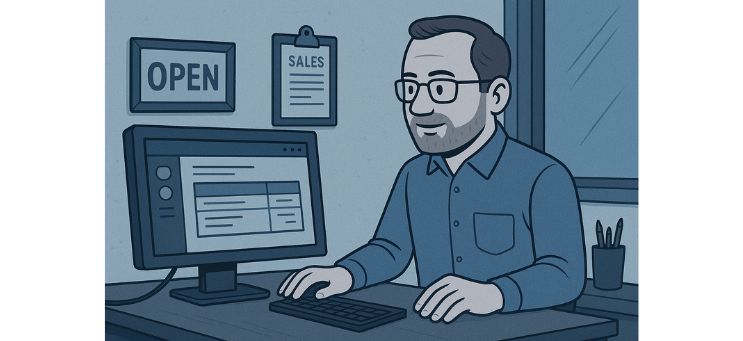
In a scenario where innovation dictates the pace of competitiveness, the use of software for small businesses is no longer just a trend, but an essential strategy for consistent growth.
According to Brazilian Association of Software Companies (ABES), os investimentos em Tecnologia da Informação e Comunicação (TIC) no Brasil atingiram 90 bilhões de dólares em 2024, colocando o país na 10ª posição no ranking mundial de investimentos no setor. Esse dado mostra que a tecnologia tem ganhado protagonismo em todas as esferas do mercado, inclusive nas micro e small businesses.
Faced with this scenario, small businesses that want to remain competitive and organized need to look at technology as a an ally of productivity, management and decision-making.
Automating processes, having real-time financial control, monitoring team performance and understanding customer behavior are just a few examples of what good software can offer.
If you want to understand how these tools can transform your company, stay with us and check out all the advantages below!
Why Adopt Software in Small Businesses?
Running a small business requires some flexibility: you have to taking care of finances, customer service, sales, stock and time to think about strategies. In this scenario, technology has emerged as a powerful ally to simplify the routine and increase results.
Using automation for small businesses ajuda a ganhar tempo, evitar erros e melhorar o controle da operação, mesmo com equipes reduzidas. Seja você MEI, microempresa ou negócio em fase de crescimento, um bom software para MEI ou pequena empresa, pode fazer mudar tudo.
Here are the main challenges faced by entrepreneurs and the reasons why you need to think about this solution:
Lack of time for operational tasks
Empreendedores costumam ficar presos a tarefas repetitivas como emissão de boletos, controle de estoque e organização de pedidos. Com a automação, essas tarefas são realizadas com poucos cliques, liberando tempo para focar no crescimento do negócio e no relationship com os clientes.
Difficulty controlling finances
Without an adequate system, keeping track of cash flow, accounts payable and receivable becomes a challenge. A software for small businesses offers dashboards, automatic alerts and financial reports, helping to organize and make decisions based on concrete data.
Disorganized processes
Without a management tool, it's common to miss deadlines, forget tasks and rely on manual spreadsheets. A system centralizes all the information in one place, improving productivity and the clarity of responsibilities for each stage of the business.
Lack of strategic vision
People who are constantly putting out fires rarely have time to plan for the future. With automatic reports, sales history, performance control and key indicators, the software helps entrepreneurs to visualize opportunities, reduce waste and make decisions with greater confidence.
Advantages of Small Business Software
Adopting a digital solution for your business isn't just about keeping up with trends, it's above all about investing in organization, agility and sustainable growth. The advantages of software for entrepreneurs vain far beyond practicalityIt helps to professionalize management, reduce errors and create a solid foundation for scaling the business safely.
See how a good system created by a software house can transform the day-to-day running of your company:
More organization in all areas
With software, information such as customer data, finances, stock and calendars is centralized in one place. This avoids rework, loss of documents and confusion between processes, bringing more order to the operation as a whole.
Increased productivity
Automating manual tasks, such as issuing invoices, scheduling appointments or controlling stock, frees up staff time for what really matters: selling more, providing better service and looking for new business opportunities.
Financial control made easy
Having a clear view of cash flow, inflows and outflows, defaults and monthly results makes all the difference in management. A good business software offers practical reports that help you plan better and avoid unpleasant surprises.
More assertive decision-making
With reports and indicators always up to date, it's easier to understand what's working and what needs to be improved. This allows you to act more quickly and safely, whether it's adjusting prices, cutting costs or investing in something new.
Solid foundation for growth
When processes are organized and automated, the company gains the structure to grow. Well-implemented software helps to scale the business without losing control, ensuring that growth is consistent and sustainable.
Features that Make a Difference
A good management system needs to go beyond the basics and offer features that really make the entrepreneur's day-to-day life easier. Whether it's to control sales, keep track of stock or keep the financial side organized, the ideal software must deliver practical and objective solutions, that will improve your routine and optimize your time.
Main features for small businesses:
- Issuing invoices and bills automatically;
- Financial control for small businesses, with cash flow, accounts payable and receivable;
- Sales and stock management, with replenishment alerts and performance reports;
- Customer registration and history;
- Generation of reports and performance indicators;
- Control panel with business overview;
- Integration with customer service channels or e-commerce;
- ERP for small businesses, with customizable modules for different areas.
Relying on these tools for entrepreneurs is an essential step towards having more clarity in management and avoiding common mistakes that affect growth. With the right technology, even the smallest companies can achieve a level of organization worthy of large operations, and it all starts with well-chosen software.
Growth with Technology: What to Expect?
The advance of digitalization in Brazil is accelerating the growth of companies betting on technology. According to ABES data, the Brazilian market for software, services and hardware should grow by 9.5% in 2025 - a clear sign that those who invest in innovation tend to come out ahead.
By adopting business management software, the impact is visible: processes become smoother, errors are reduced and productivity increases. This allows entrepreneurs to make more confident decisions, plan for growth and devote more time to attracting customers and selling more.
More than just following a trend, using technology in your business's favor means creating a solid foundation to evolve with consistency and agility. And the best part: with so many affordable options on the market, even the small entrepreneur can make this leap safely and efficiently.
How to Choose the Best Software for Your Business
Choosing a management system for small businesses ideal requires attention to details that go far beyond price. The software needs to adapting to the reality of your business, The most important thing is that it offers the features you really need and is easy to use on a day-to-day basis. To help you make this choice, here are some practical criteria that should guide your decision.
Criteria for choosing the best software:
- Check that the system is easy to use and has an intuitive interface;
- Assess whether it meets the specific needs of your type of business;
- Prefira soluções com technical support rápido e eficiente;
- Check that the software offers clear reports and strategic data;
- Prioritize tools with sales management, stock and financial control;
- Check if it can be integrated with other channels or systems;
- Consider options with scalable plans that grow with your company;
- Test the demo version or trial period before signing up;
- Make sure the supplier is reliable and has good reviews on the market;
- Analyze the cost-benefit in the long term, not just the initial value.
Avoid software with unnecessary functions, excessive complexity or that requires too many adaptations to fit into your company's routine. A system that is difficult to use, unsupported or poorly adapted can get in the way more than it helps and end up generating losses rather than results. Make sure you carry out all software development stages before launching your system.
Conclusion
Adopting software for small businesses means investing in agility, control and growth. With the right tool, your company gains more organization, reduces errors and becomes more competitive in the market. What's more, you have more time to focus on what really matters: making your business thrive.
If you're ready to take this step, request a quote or talk to one of our team. UpSites experts. We'll help you find the perfect solution for your business!
Frequently Asked Questions
What is the best software for small businesses?
The best software for small businesses is that which adapts to the company's reality, offers essential functions such as financial control, issuing invoices and stock management, and is easy to use. ERPs with scalable plans and efficient technical support are the most recommended for those in the growth phase.
Is it worth using a management system even if you're an MEI?
Yes. Good software for MEIs helps maintain financial control, issue invoices, organize clients and streamline daily tasks, even with a lean operation. This avoids common mistakes and frees up time for the entrepreneur to focus on sales and business growth.
What functionalities should small business software have?
Among the main features are: automatic issuing of invoices, stock control, sales management, cash flow, customer registration and report generation. More complete systems also offer integration with e-commerce and basic CRM.
How do I choose management software for my company?
Assess whether the system is intuitive, meets the needs of your type of business and has good support. Also check that it offers useful features, integration with other tools and that the plan you have contracted is compatible with your company's current stage. Testing a demo version before signing a contract is also essential.

Lucas Pelisari
Lucas Pelisari has been an SEO and content specialist at UpSites for over 6 years, working on the creation and optimization of digital strategies focused on lead generation and organic growth. With experience in website development projects, on-page SEO and link building, he works directly on structuring content and pages aimed at positioning on Google and acquiring qualified traffic. Throughout his career, he has worked on projects for companies such as Kommo, Aldanth, Physical Care, In4, Design.com, Adaptive, Clipto and YeSim, as well as several other clients served by UpSites. He works on projects in different niches, including technology, SaaS, services and local businesses, with a focus on performance, conversion and scalability. Her work is directly linked to lead growth and increased organic visibility, with projects that have seen consistent traffic gains after implementing SEO and content strategies. His content covers topics such as professional website creation, SEO, page structure, performance, user experience and digital growth strategies, always with a practical approach based on real market scenarios.
See all posts


 Calculate Price Now