

Website Redesign: Know when to redesign your website
Summary (TL;DR)
Website redesign is the process of modernizing and optimizing an existing website, making it more attractive, functional and aligned with business needs.
It is important because it guarantees a better user experience, improves positioning on Google, increases conversions and strengthens the brand's digital presence.
Keeping your website up to date is essential if you want to compete in the market and generate consistent results.

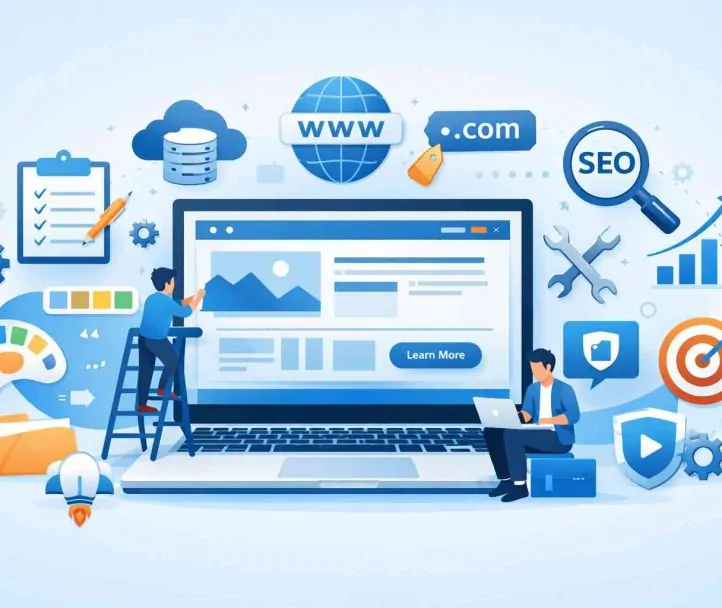
A website redesign is the process of updating, reorganizing or rebuilding an existing website to make it more modern, functional and aligned with business needs. It serves to improve the user experience, optimize performance, apply good SEO practices and ensure that the site keeps up with digital market trends.
Maintaining an up-to-date website is essential for conveying credibility, attracting customers and standing out from the competition. If your site is out of date, slow or not generating results, it may be time to take action. See below when to consider a complete overhaul and how to spot the signs.
What is a website redesign and what is it for?
A website redesign is a strategic update that goes beyond aesthetics: it involves performance, usability, content and technology. It serves to correct flaws, improve Google positioning and make the site an efficient tool for achieving results.
Understand what website redesign is for:
- modernize the design and convey professionalism;
- improve navigation and usability;
- make the responsive website for cell phones and tablets;
- increase loading speed;
- correct technical faults and security problems;
- apply SEO strategies from the ground up;
- update content and make it easier to manage;
- align the site with the company's current objectives;
- integrate new tools and functionalities;
- increase conversions and lead generation.
When should the site be redesigned?
The decision to redesign a website must be based on clear signs that it is no longer meeting the needs of the business. There are specific situations that indicate the need to update, either due to the difficulty of managing content or the lack of real results. Check out some of them below:
Content difficult to manage
If updating information on your website is a constant challenge, this is one of the main signs that a redesign is necessary. Old or poorly configured platforms make management slow, bureaucratic and dependent on technical professionals for any adjustments.
A website redesign can simplify management, allowing your team to easily update content and keep the site alive. Here are some examples of warning signs:
- CMS out of date or difficult to use;
- difficulty in publish new content;
- pages with frequent errors when editing;
- lack of an intuitive administrative panel;
- dependence on technical support for simple changes.
Website doesn't generate results
A website that doesn't attract visitors or convert customers is failing to fulfill its main function. This is often due to design flaws, outdated SEO or a lack of clear CTAs.
With the redesign of websites, it is possible to align the site with the marketing strategy and the needs of the public, turning it into a business-generating asset. Here are some common examples of low performance:
- few organic visits from Google;
- high bounce rates on key pages;
- no contact or conversion forms;
- outdated design that doesn't convey confidence;
- website without integration with marketing tools.
Lost positions on Google
When your site drops in Google's rankings, it's a clear warning that something needs to be reviewed. The loss may indicate SEO problems, outdated content or competitors strengthening their strategies. If you notice consecutive drops for no apparent reason, it's time to consider a revamp to regain visibility.
Examples of warning signs:
- keywords that used to be at the top are now on later pages;
- a drop in monthly organic traffic with no apparent cause;
- pages that used to appear in the SERPs no longer do;
- competitors with newer sites occupy positions that used to be yours;
- decrease in perceived authority or backlinks lost.

Doesn't work well on smartphones
With more and more people browsing on cell phones, a website that doesn't adapt well to mobile devices loses relevance and users. In Brazil, for example, there are 480 million digital devices in use, This is around 2.2 per inhabitant.
When a website doesn't work well on a smartphone, the user experience suffers, dwell time drops and the chances of conversion decrease dramatically. Slow sites, broken menus or inaccessible buttons generate immediate rejection.
Examples of mobile problems:
- layout that “disconfigures” on small screens;
- buttons or links that are impossible to click on;
- texts that are too short to read;
- images or videos that don't fit correctly;
- slow loading times, especially on mobile networks.
Outdated layout
One layout can convey an outdated image of your brand and drive away potential customers. If colors, typography and visual style no longer reflect your identity or values, the site no longer represents who you are today. Redesigning websites allows you to align design and visual identity with your company's current positioning.
In addition, poorly matched visual elements - letters that don't follow the identity, disconnected colors or styles that lack cohesion - make the site look untrustworthy and unprofessional. An aligned aesthetic strengthens the perception of value.
Examples of signs of an outdated layout:
- colors that don't match the current visual identity;
- fonts incompatible with the brand's style;
- dated visual elements (old textures, exaggerated borders);
- confusing structure or an excess of obsolete visual effects;
- lack of harmony between pages, such as inconsistency of style.
Without modern technologies
A website built with old technologies limits performance, security and scalability. Obsolete tools make updates difficult, make the site vulnerable and prevent the adoption of new features. Redesigning means updating the technological base to offer better performance over time.
In addition, relying on discontinued or unsupported extensions or plugins is a risk. Modernization makes it possible to integrate resources such as headless, Progressive Web Apps (PWA) or modern APIs, expanding possibilities.
Examples of signs of outdated technology:
- Very old CMS with no recent updates;
- unsupported or incompatible plugins or extensions;
- code that is not modular or difficult to maintain;
- lack of integration with modern platforms (automation, APIs);
- lack of certifications or basic safety practices.
Does not generate conversions
A website that receives visits but fails to turn users into customers is failing in its main function. This is often due to a lack of convincing CTAs, poorly structured pages or a lack of focus on the user. Website redesign allows you to optimize conversion paths.
With a new structure, you can reorganize offers, highlight benefits and make the journey more fluid. Visual adjustments, strategic texts and A/B tests all contribute to better conversion. Here are some examples that indicate low conversion:
- visitors who “leave” without interacting;
- service pages with just a few clicks on the buttons;
- large or confusing forms that are not filled in;
- no strong argument or social proof on the pages;
- a “hidden” or poorly positioned offer.
How are websites redesigned?
Redesigning websites is not just an aesthetic change: it involves strategic planning, technology and communication. The process of Web development (or redesign) must follow well-defined steps to ensure that the site is efficient, modern and connected to the needs of the business. Check out the five fundamental steps to carry out this transformation:
1. understand your audience
Before any change, it is essential to map out who accesses your site. This process involves identifying both the target audience and the persona:
- Target audience: a broader group of people or companies that can consume your product or service (age group, location, profession, income).
- Persona: a semi-fictitious profile that represents the ideal client, with a name, routine, pains, objectives and specific behaviors.
A thorough knowledge of these two dimensions allows you to create a website with language, website design and targeted resources. So every detail is thought out to attract, engage and convert the right visitors.
2. Create a visual identity
Visual identity is the set of graphic elements that represent your brand and create instant recognition. It includes the logo, color palette, typography and image style, and is fundamental for conveying credibility and strengthening digital presence.
Redesigning websites without updating or aligning the visual identity can leave communication incoherent. For this reason, the process must guarantee consistency between the website, social networks and other points of contact for the brand.
Main aspects of visual identity:
- well-defined and adaptable logo;
- color palette consistent with the brand;
- consistent and legible typography;
- standardized style of icons and illustrations;
- use of images aligned with the company's positioning;
- graphic elements that convey the value proposition.
3. Plan the design
O design is responsible for transforming identity and strategy into a visual and functional experience. It must be designed to attract visitors, easy navigation and lead the user to conversion. More than beauty, design needs to generate practical results.
When redesigning websites, visual planning must take into account usability, information hierarchy and aesthetic harmony. Good design balances clarity, interactivity and consistency, making the site intuitive and engaging.
Elements that design needs to have:
- responsive layout adapted to different devices;
- simple navigation and intuitive menus;
- clear and well-placed buttons and CTAs;
- balance between images, icons and text;
- use of blank spaces to facilitate reading;
- consistency between all pages of the site;
- accessibility for different user profiles.
4. Improve content
Website redesigns should also look at content. Outdated, superficial or poorly organized texts are detrimental to Google's ranking and to user experience. Updating content ensures that the site is aligned with current searches and communicates value clearly.
In addition, quality content increases brand authority, improves the customer journey and strengthens lead generation. It's an opportunity to make your website a reliable source of information.
Tips for improving content:
- revise old texts and update information;
- use simple and objective language;
- highlight the company's benefits and differentials;
- add reliable data and statistics;
- include testimonials and social proof;
- create clear and attractive CTAs;
- use images, videos and infographics;
- organize into topics and lists for scannability;
- maintain consistency of tone and style;
- publish new content regularly.
5. Apply SEO techniques
SEO is one of the pillars of a good website redesign. There's no point in having a modern website if it doesn't appear in search engines. With SEO techniques applied from the ground up, the site gains more visibility, attracts qualified traffic and increases the chances of conversion.
A optimization also guarantees long-term competitiveness, as it improves the user experience and helps Google to better understand the site's content. This makes the investment more strategic and sustainable.
Main SEO strategies:
- keyword research in your niche;
- optimized and attractive headlines (H1, H2);
- well-structured meta descriptions;
- Friendly and short URLs;
- optimizing images with alternative texts;
- use of quality internal and external links;
- original and up-to-date content;
- site performance and speed;
- responsive design and mobile-friendly;
- monitoring metrics in Google Analytics and Search Console.
Is it worth hiring a website redesign agency?
Yes, it's worth hiring an agency to redesign your website, especially if you want a professional and strategic results. Relying on experts speeds up the process and avoids mistakes that could jeopardize your investment.
Here are some reasons why it's worth hiring an agency:
- up-to-date technical knowledge;
- expertise in design, UX and technology;
- correct application of SEO from the outset;
- customized solutions for your business;
- ongoing support and professional maintenance;
- performance and security optimization;
- saving time and focusing on core business;
- delivering consistent and measurable results.
It's time to renew your digital presence
Redesigning websites is the way to transform your site into a modern, efficient tool that generates results. Updating design, content, technology and SEO guarantees not only more visits, but also more conversions and brand strengthening.
If you're looking for an agency specializing in website redesign, the UpSites is ready to help. Our team combines strategy, design and technology to create websites that really work. Click on the button below and find out how we can take your digital presence to the next level.
Contact us and we will help you.
Frequently Asked Questions
When should I consider redesigning my website?
Redesign should be considered when the site is obsolete, has low conversion, has responsiveness problems, or when there are brand changes and outdated technologies.
How do I know if my site is well positioned on Google?
Check that your site appears in the top three results when searching for keywords relevant to your business. If not, it's important to optimize the SEO and content of the site.
Why is it important for my site to be responsive?
A responsive website guarantees a good browsing experience on mobile devices, which account for a large proportion of online traffic. It should be adapted for smaller screens and have elements such as clickable phones and links to Google Maps.
How can redesigning the site increase conversions?
Integrating chatbots, optimized forms and strategies focused on the user experience can increase lead capture and improve conversions, positively impacting sales.
How long does a website redesign take?
The timeframe for a redesign varies according to the complexity of the project. Simple institutional sites can be adjusted in a few weeks, while e-commerces or customized projects can take months. The time depends on the number of pages, integrations required and design and content adjustments.
Is it better to redesign or create a new site from scratch?
It all depends on the current state of your website. If the technological base is old and doesn't offer adequate support, creating a new one may be more efficient. If the site has a solid structure but needs visual and functional improvements, a redesign is sufficient. An agency can indicate the best option after analysis.
Do I need to redesign my site even if it still works well?
Yes, in many cases. A site can be “working” but still not deliver adequate performance, SEO and experience. Competition, algorithm changes and new user expectations demand frequent updates. Redesigning ensures that you remain competitive and attractive in the digital marketplace.
Does reformulation automatically improve SEO?
Not necessarily. Redesigning your site improves technical aspects such as speed and responsiveness, but you need to apply strategic SEO techniques to guarantee good results. This includes optimizing content, structuring URLs, applying the right tags and maintaining consistency in updating information.
What signs show that my site needs a makeover?
Among the main signs are a drop in organic traffic, outdated layout, navigation difficulties, incompatibility with mobile devices and low conversion rates. If the site no longer represents your brand or doesn't generate real results, a redesign is the natural next step.
Does redesigning the site affect my pages already indexed on Google?
Yes, it can. If the reformulation is not done with planning, URLs can be lost and ranking positions compromised. That's why it's essential that redirects are set up and that good SEO practices are followed during the process, preserving the authority already gained.

Caio Nogueira
Caio Nogueira is co-founder of UpSites and a reference in website development and SEO consultancy. With over 10 years' experience and more than 900 projects completed for brands such as KaBuM, UNIMED, USP and Nestlé, Caio stands out for his competence in digital project management.Caio has also been a guest author on influential digital marketing websites such as Neil Patel, Rock Content, Hostinger, Duda, Hostgator and Locaweb, where he has shared his expertise in SEO and content marketing.
See all posts


 Calculate Price Now