

How long does it take to develop a professional website?
Summary (TL;DR)
The development time for a professional website can vary depending on the type of site, complexity, content, design and technology used. Simple websites are quicker, while customized projects require more steps and planning. A simple website can usually be completed in up to a week (7 days), but can take up to 30 days depending on its complexity.
UpSites offers everything from agile solutions, such as ready-made templates and express sites, which allow you to get a professional site up and running in just a few days, to more complex models made completely from scratch. Check out all the details and find out which option makes the most sense for your project.

When we talk about how long does it take to develop a professional website, the most correct answer is: it depends. The timeframe varies depending on the type of site, the level of customization and the functionalities involved. In general, simple institutional sites take 2 to 4 weeks, while more complex platforms can require 3 to 6 months or even longer, depending on the scope.
These deadlines are not random. They reflect stages such as planning, design, development, testing and final adjustments. Check out the main factors that impact on creation time and understand how long it can take for your site to be ready, depending on the type of project.
How long it takes to develop a professional website by type of website
Each type of website has its own characteristics, different levels of complexity and specific technical demands. For this reason, development times vary greatly from one project to another. See below for the most common average times:
Corporate website
O institutional website is suitable for small and medium-sized businesses, freelancers and service providers who want to make their presence felt online in a professional manner. This type of site usually has pages such as “About Us”, “Services”, “Contact” and, in some cases, a blog.
Because it has a simpler structure and few integrations, the average development time usually varies between 2 and 4 weeks, The site will be customized, adapted for mobile devices and basic SEO configurations.
Blog or portfolio
Blogs and portfolios are even leaner projects, often used by freelancers, content creators, photographers, designers and companies that want to produce content. The structure is focused on the visual presentation and organization of texts, images or projects.
Because they require fewer pages and functionalities, these sites are usually ready in 1 to 2 weeks, especially when the content is already organized and defined from the start.
E-commerce
Developing an e-commerce site is naturally more complex. It involves registering products, configuring payment methods, shipping, integrating with external systems and taking extra care with security and usability.
One e-commerce basic usually takes from 1 to 3 months, depending on the number of products and the integrations required. More complete online stores, with specific rules, automation and advanced customizations, may require longer lead times. This type of site is suitable for companies and shopkeepers who want to sell online in a structured way.
Complex platforms
Complex platforms include customized systems, restricted areas for customers, dashboards, integrations with ERPs, CRMs or other software, as well as specific tailor-made functionalities.
Because they require more planning, detailed technical architecture, testing and validation, these projects usually take from 3 to 6 months. In more robust or highly personalized cases, development can exceed this deadline. This type of site is suitable for companies that need more advanced digital solutions, going beyond a traditional website.
What factors influence the deadline?

The time it takes to develop a professional website doesn't just depend on the type of project. There are technical, strategic and operational factors that have a direct impact on the final deadline. Understanding these points helps to align expectations, avoid delays and ensure that the site is delivered with quality. Check out the main factors that influence this schedule:
Complexity
The more complex the site, the longer the development time tends to be. Functionalities such as a shopping cart, restricted areas for members, students or clients, scheduling systems, integrations with external software or customized logic require more planning, testing and validation, naturally increasing delivery time.
Contents
The availability and quality of the content make a big difference to the schedule. Text, images and videos that are ready, well-defined and aligned with the site's objective speed up the process. Content that still needs to be created, revised or approved can lead to pauses in development and extend the deadline.
Personalized design
Sites based on ready-made themes tend to be developed more quickly, as they already have a defined visual structure. On the other hand, a unique design, created from scratch to reflect the brand's identity, takes more time. stages of creation, adjustments and validations, which has a direct impact on development time.
Technology
The technology chosen also influences the deadline. Consolidated platforms such as WordPress tend to speed up simpler, medium-sized projects. On the other hand, customized platforms, tailor-made solutions or the use of specific tools require more time for configuration, development and testing, especially when they involve complex integrations.
Collaboration
The client's agility is a determining factor. The speed with which stages are approved, feedback is sent and requested information is delivered has a direct impact on the schedule. Collaborative projects, with clear communication and quick decisions, progress much faster.
Professionals
The experience of the website developer makes all the difference. Highly trained professionals work more efficiently, anticipate problems and deliver results in less time. That's why, website creation agencies, such as UpSites, stand out for their speed and professional delivery, with a team, structured processes and complete infrastructure.
In comparison, professionals who work alone, without a team or technical support, tend to take longer to complete larger projects.
What are the stages in developing a professional website?
The development of a professional website follows a structured process that guarantees organization, quality and meeting deadlines. Each stage plays a strategic role in ensuring that the site is not only visually beautiful, but also functional, secure and aligned with business objectives. Check out the main phases of this process:
1. Planning and discovery
This is the initial stage and one of the most important. This is where complete understanding of the project, This includes defining goals, website objectives, target audience, necessary functionalities and client expectations. The deadlines, project scope and strategic guidelines that will guide all the next phases are also defined.
2. Contents
With the planning defined, the content creation and organization phase. This includes texts for institutional pages, descriptions of services or products, as well as images and videos that will be used on the site. Having this material well structured from the start avoids rework and speeds up development.
3. Design (UI/UX)
At this stage, the focus is on visual identity and user experience. O design UI defines colors, typography, layout and visual elements, while UX ensures that the site is intuitive, easy to navigate and pleasant for those who access it. The aim is to combine aesthetics and usability in a strategic way.
4. Development
Here the site begins to come to life. The team carries out the coding, configuring the chosen platform and implementing the functionalities foreseen in the planning, such as forms, restricted areas, integrations or specific resources. This is the most technical phase of the project.
5. Tests and adjustments
Before launching, the site goes through a rigorous testing and validation stage. Failures and navigation errors are checked, responsiveness problems, The tests are carried out to determine performance and compatibility with different devices and browsers. Based on these tests, final adjustments and improvements are made.
6. Launch
Once everything has been reviewed and approved, it's time for the launch. The site is officially published, set up on the domain and hosting, and made available to the public. After that, initial follow-ups can be made to ensure that everything is working as expected.
Fast and cheap website, is it possible?
Yes, it is possible to combine speed, quality and affordability when developing a website. At UpSites, this happens through Express Website, a method designed for those who need a professional website in a short space of time. The project is developed in up to 5 days by experts, with an organized process, competitive prices and a total focus on efficient delivery.
It's the ideal solution for those who want to put their site online without sacrificing professionalism. Check out how it works below:
Choose a Template
The first step is to choose between variety of website templates, all developed by our experienced designers. The layouts are modern, responsiveThis speeds up the process without compromising the visual quality and usability of the site.
Send Your Content

After choosing the model, you send all content you want on the site through our exclusive platform, designed to make the process easier. Texts, images, institutional information and contact details are organized in a simple way, avoiding endless email exchanges and delays in delivery.
Website up and running
Once the template has been chosen and the content sent, our team takes care of all the technical aspects. In a few days, the site is finalized, revised and published, ready for the public to access. The result is a functional, fast website aligned with the needs of your business.
In addition, we have website templates for practically every type of niche, such as blog, community, education, technology, services, events, gastronomy, business, health and much more.
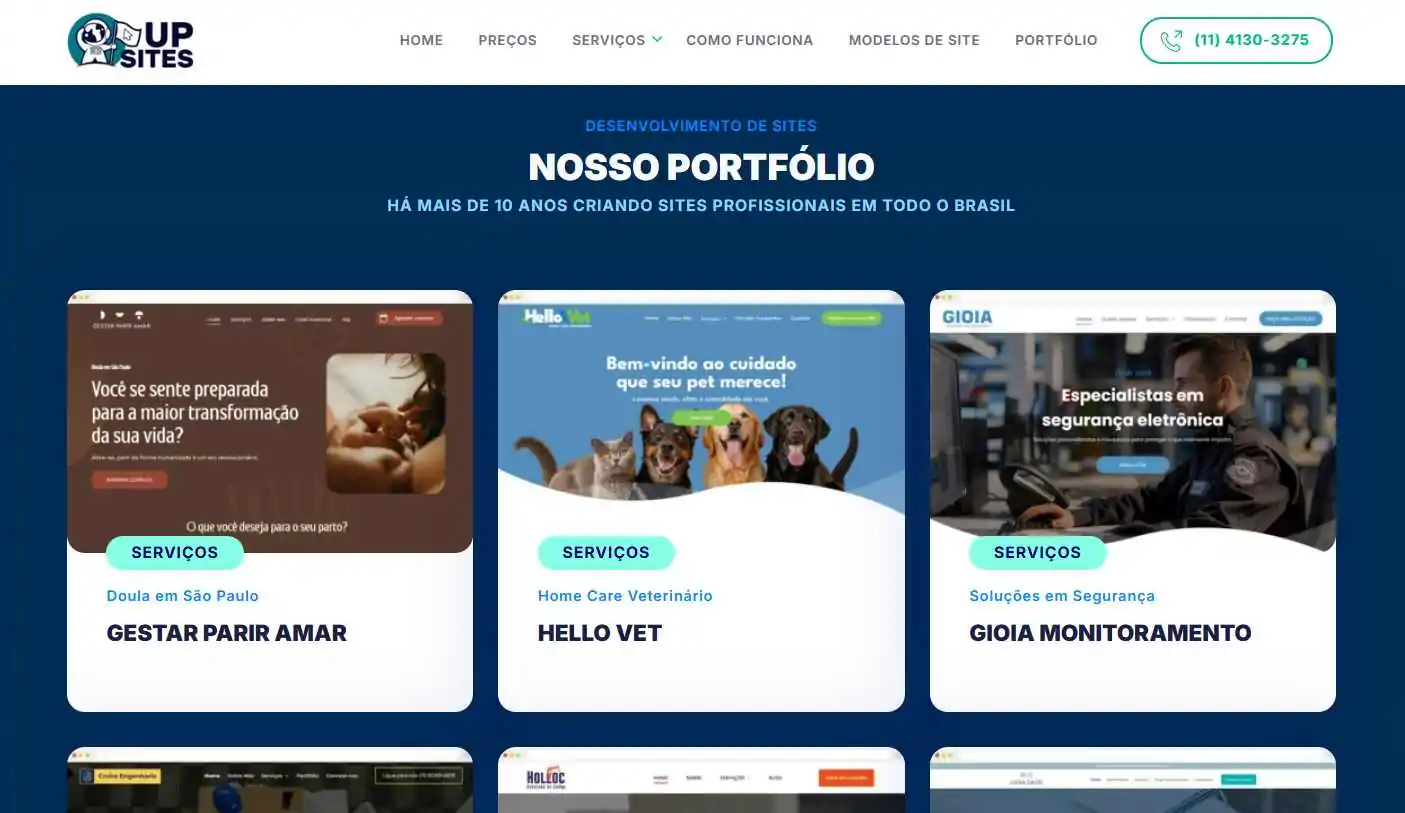
check out our full portfolio here: https://upsites.digital/portfolio/
If you are looking for professional website development in an agile and efficient way, the UpSites Express Website is the right choice. Find out now how Site Expresso works and get your site up and running in just a few days.
(BANNER)
Get your site online without the hassle
Creating a website doesn't have to be a long, expensive or complicated process. With UpSites' solutions, you can count on methods, experienced professionals and a total focus on results. Talk to us now our experts and find out which development model is best for your project.
Click on the button below and get a quick quote with us, and start your professionally optimized website with SEO consultancy exclusive!

Frequently Asked Questions
Is it possible to speed up the site's development time?
Yes. When the scope is well defined, the content is sent quickly and the client actively participates in approvals, the deadline can be reduced. In addition, solutions such as ready-made templates and standardized processes help to significantly speed up delivery.
Does a site that's quick to develop lose quality?
Not necessarily. A website can be quick to develop when there is a method, an experienced team and well-defined processes. What compromises quality is not the speed itself, but the lack of planning, revision and trained professionals.
What's the difference between an express site and a tailor-made site?
The express site uses pre-structured templates and agile processes, making it ideal for those who need speed. The tailor-made site is completely personalized, designed from scratch, and is ideal for more complex projects with longer development times.
Does the content interfere with the site's delivery time?
Yes, very much so. The lack of clear texts, images and information is often one of the main reasons for delays. The more organized and complete the content sent by the client, the faster the site can be developed.
Does exclusive design increase development time?
Generally, yes. A fully customized design requires more stages of creation, validation and adjustments, which has a direct impact on the schedule. Using ready-made layouts, on the other hand, significantly reduces delivery time.
Is it worth hiring an agency instead of a freelance professional?
In most cases, yes. Agencies have a multidisciplinary team, defined processes and a complete infrastructure, which guarantees more agility, less rework and more consistent deliveries than professionals who work alone.
Once launched, does the site need maintenance?
Yes. Even after publication, the site needs updates, technical adjustments, performance and security improvements. Ongoing maintenance ensures that the site remains fast, secure and in line with business needs.

Lucas Pelisari
Lucas is an SEO specialist at UpSites. He has helped several companies climb the google rankings and is always improving his skills. He is also a digital marketing enthusiast and always tries to keep up to date with the digital world.
See all posts



 Calculate Price Now