

5 Strategies to Reduce the Bounce Rate on a News Portal
Summary (TL;DR)
In this post, we'll cover the impact of bounce rate on news portals and how to reduce this crucial indicator for your website's health.
The bounce rate reflects the percentage of visitors who quickly leave the portal without interacting with the content.
A high bounce rate can be caused by design issues, loading times, or irrelevant content. When readers don't find what they're looking for efficiently, it affects both the portal's experience and monetization.
We will also present five effective strategies to reduce bounce rate and improve reader engagement.
Among the recommended actions are: improving the website's design and navigation, speeding up loading times, optimizing content, implementing non-intrusive pop-ups, and personalizing the user experience.
By applying these practices, it is possible not only to reduce the bounce rate but also to increase reader loyalty and maximize monetization opportunities.

Quick access
- Why is the bounce rate high on news portals?
- Strategy 1: Improve Website Design and Navigation
- Strategy 2: Speed Up Website Load Time
- Strategy 3: Optimize Content for the Reader
- Strategy 4: Implement Pop-ups and Calls to Action Non-Intrusively
- Strategy 5: Personalize the User Experience Based on Behavior
- Conclusion - Reducing Bounce Rate on a News Portal
Reduce to bounce rate on news portal This is a battle many portal owners face. This bounce rate is one of the most important indicators for evaluating a website's performance. It measures the percentage of visitors who leave the portal without interacting or navigating to other pages.
A high fee can mean trouble in the user experience, lack of engagement, or even irrelevant content. As a reference, news portals can have bounce rates ranging between 30%and 80%, depending on factors such as design, the loading speed and the quality of the content.
When the bounce rate is high, the impact isn't just on the numbers, but also on revenue. A website that doesn't keep readers engaged Curtain monetization opportunities like ad views or conversions to subscriptions.
Furthermore, user experience is directly affected, influencing how long people spend on the site and their willingness to return.
If you want to improve the user experience on journalistic portals and reduce the bounce rate, you are in the right place. Check out five practical strategies that can transform your portal into a more attractive, engaging, and efficient environment.
Why is the bounce rate high on news portals?
One of the most common reasons for a high bounce rate is a Confusing or outdated design. When the layout it's not intuitive or doesn't work well on mobile devices, visitors will simply give up.
What's more, Slow loading times are another big problem. Studies show that websites that take more than three seconds to load can lose up to 40% of users immediately.
Another factor is irrelevant or unreliable content. According to research, 53% of readers prioritize portals that offer credibility and quality. This means that misinformation or unappealing content can quickly drive visitors away.
To improve reader engagement on news portals, it is essential to invest in well-crafted, visually appealing texts that are updated with audience demands.
Readers have also become more demanding, especially regarding navigation and interactivity. Portals that do not offer clear menus, efficient search options, or personalized content tend to lose visitors to competitors who better meet these expectations.
Well, but how do you reduce the bounce rate of a news portal? That's what you'll see now:
Strategy 1: Improve Website Design and Navigation
One Clean and responsive design is essential for attracting and retaining readers. Ensure the portal's layout is easy to understand, with a clear visual hierarchy and legible fonts. Elements like colors, spacing, and images should be balanced to avoid overwhelming the page, creating a Pleasant experience on both desktops and mobile devices.
Well-structured menus and navigation bars help visitors find the content they're looking for effortlessly. Group categories logically and use an efficient search system to make it easier to locate specific topics. A good example is the use of breadcrumbs, which indicate to the user exactly where they are on the site and how to go back.
For example, on R7 you'll find breadcrumbs, which are great for user navigation:
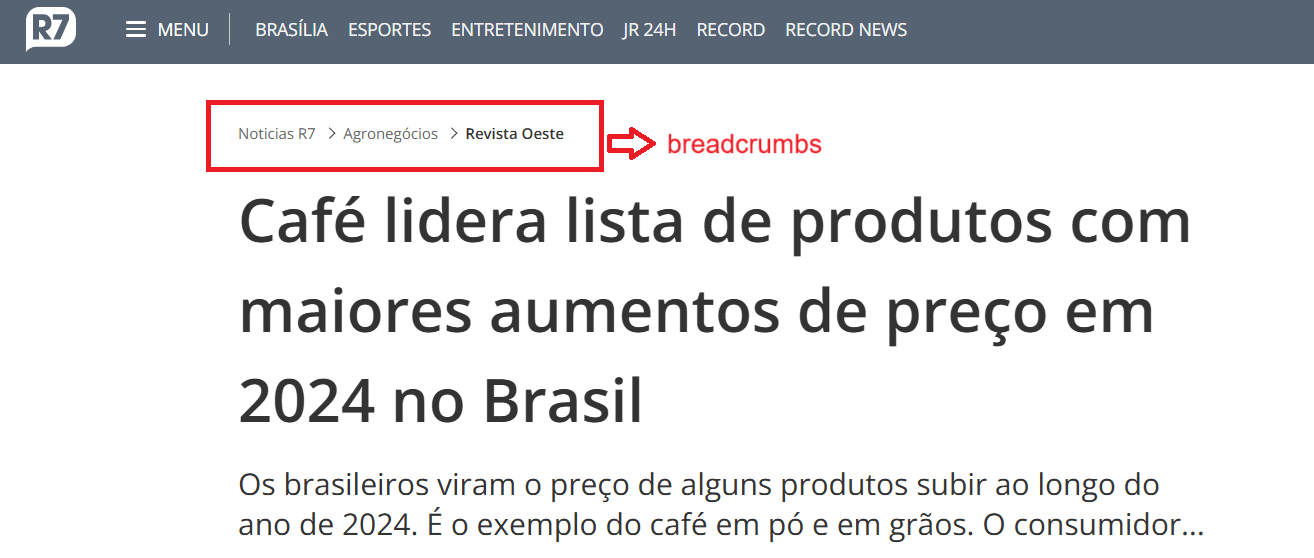
These design practices aren't just about aesthetics, It's about functionality. Portals that prioritize intuitive navigation they can reduce bounce rate and improve reader retention by encouraging them to view more content.
Strategy 2: Speed Up Website Load Time
Speed is one of the most critical factors for the performance of a news portal. A slow website not only increases the bounce rate, but also negatively affects SEO, since search engines prioritize fast pages.
Tools such as Google PageSpeed Insights help identify performance bottlenecks and suggest improvements. Image compression, reduction of CSS and JavaScript files, and the use of caching systems are common practices to speed up loading.
These are the ideal numbers for a fast website; the example below is from UpSites:
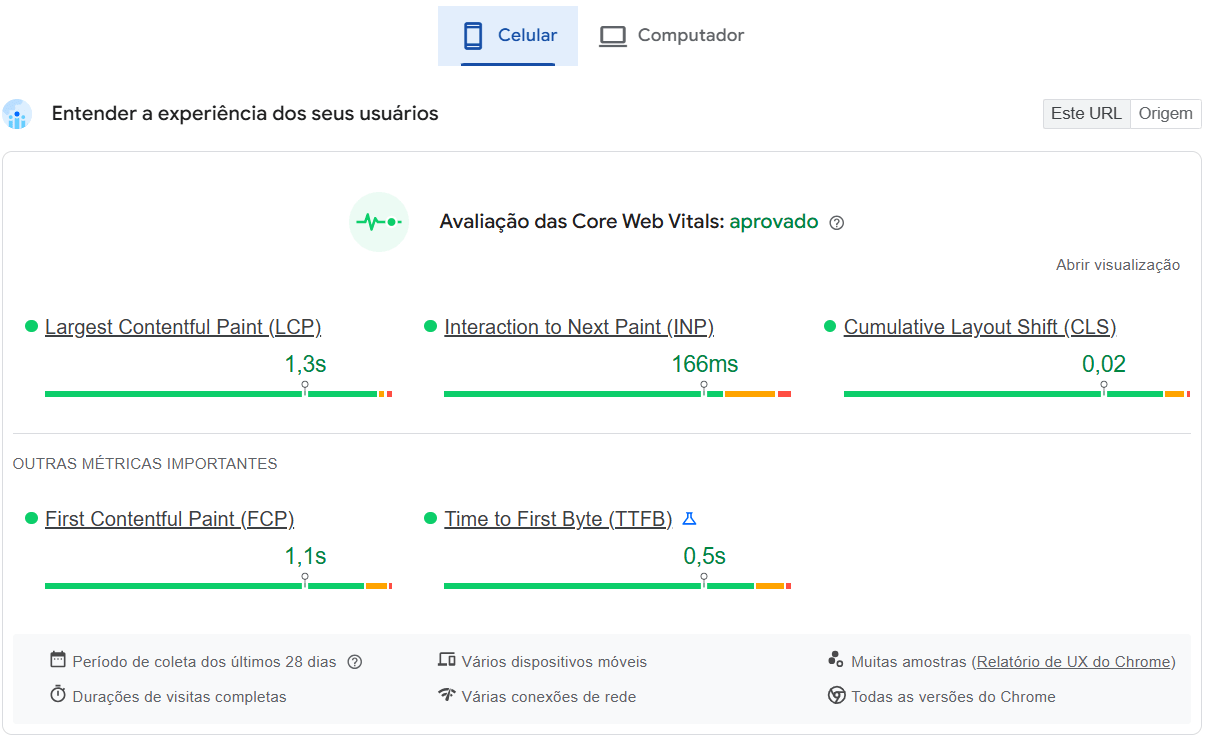
Don't forget to optimize mobile performance<span As readers are increasingly consuming news on smartphones, ensuring the site is light and fast on these devices is essential to improve user experience on portals.
Strategy 3: Optimize Content for the Reader
Content is the heart of any news portal. Catchy titles and diverse formats, such as videos, infographics, and podcasts, can significantly boost engagement. Use subheadings and short paragraphs to make the text more scannable and appealing.
Another way to engage readers is to invest in interactivity. Tools such as polls, comments, and internal links not only keep users on the site longer, but also encourage active participation.
For example, on G1 users can find formats such as podcasts, calculators, columns, infographics, and much more:
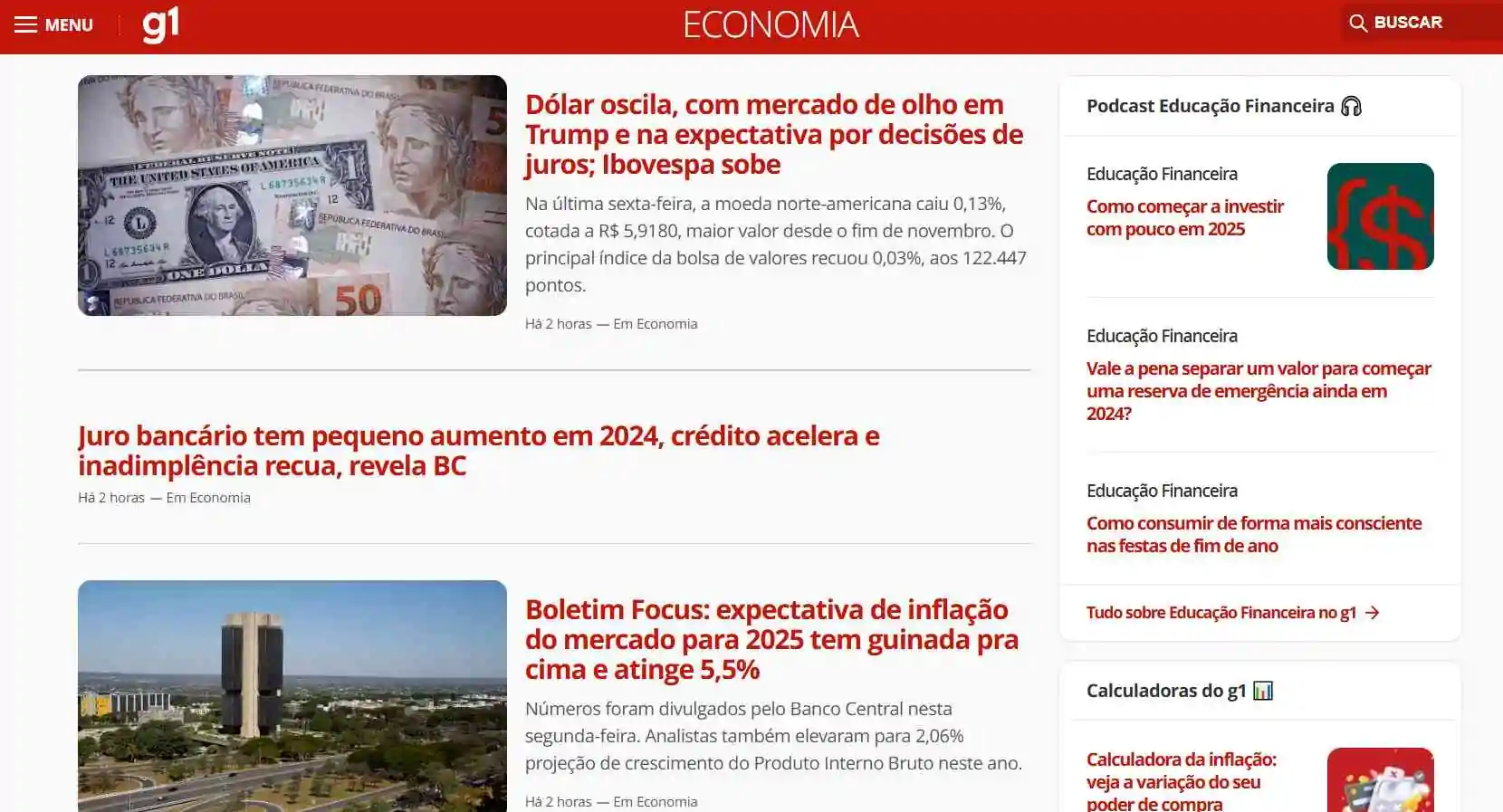
In addition, apply SEO techniques it is essential to increase the portal's visibility. Well-positioned keywords, Optimized meta descriptions and relevant content help the website stand out in search results and attract more visitors.
Strategy 4: Implement Pop-ups and Calls to Action Non-Intrusively
Pop-ups can be useful for capturing leads or promoting content, but they should be used with care. Avoid intrusive pop-ups that block reading or appear repeatedly. Prefer formats that appear in strategic moments, as at the end of an article or when the user tries to leave the page.
Good examples of this are CTAs that offer immediate value, such as “Get the day's top news delivered straight to your inbox.” Additionally, use personalized messages to grab attention without irritating the reader.
Check out this example:

When well implemented, these interactions help guide users to specific actions, such as subscriptions or engagement with other content, without compromising the overall user experience.
Strategy 5: Personalize the User Experience Based on Behavior
A personalization It is one of the most effective ways to keep readers engaged. Recommendation tools, like those used by major portals, can suggest articles based on browsing history or user preferences.
This approach not only improves the experience but also increases the time spent on the site, reducing the bounce rate. The more relevant the content presented, the greater the chance the visitor will explore other pages.
Check out this example, where we have a pop-up with an article suggested for the reader that complements the article that is currently open:

Additionally, personalization creates a stronger connection between the portal and the audience, showing that the site understands and caters to their specific needs. It's a really cool thing to have on a portal!
Conclusion – Reducing Bounce Rate on a News Portal
The strategies presented in this content show how small improvements can have a significant impact on reader retention and reducing bounce rates on news portals. From optimizing design and speeding up loading times to personalizing the user experience, each action contributes to a more efficient and engaging portal.
Start implementing these tips today and monitor the results with analytical tools. Identify what works best for your audience and continue adjusting to achieve the best possible performance.
If you want to go further and transform your portal, count on UpSitesOur team is ready to help you create an amazing experience for your readers and boost your website's results.
Frequently Asked Questions
What is bounce rate and why is it important?
The bounce rate measures the percentage of visitors who leave the site without interacting with other pages. This indicator is essential for evaluating user experience and portal performance, directly impacting monetization and audience engagement.
What factors contribute to a high bounce rate?
Problems like confusing design, slow loading times, and irrelevant content can significantly increase bounce rates. These elements make navigation difficult and drive readers away, harming both the portal's visibility and revenue.
What strategies help reduce the bounce rate on a news portal?
Improving design and navigation, optimizing loading times, and personalizing the user experience are effective measures for reducing bounce rates. Additionally, using non-intrusive pop-ups and calls-to-action can keep readers engaged and encourage interaction with the content.
How can UpSites contribute to optimizing my news portal?

Lucas Pelisari
Lucas Pelisari has been an SEO and content specialist at UpSites for over 6 years, working on the creation and optimization of digital strategies focused on lead generation and organic growth.With experience in website development projects, on-page SEO and link building, he works directly on structuring content and pages aimed at positioning on Google and acquiring qualified traffic.Throughout his career, he has worked on projects for companies such as Kommo, Aldanth, Physical Care, In4, Design.com, Adaptive, Clipto and YeSim, as well as several other clients served by UpSites.He works on projects in different niches, including technology, SaaS, services and local businesses, with a focus on performance, conversion and scalability.Her work is directly linked to lead growth and increased organic visibility, with projects that have seen consistent traffic gains after implementing SEO and content strategies.His content covers topics such as professional website creation, SEO, page structure, performance, user experience and digital growth strategies, always with a practical approach based on real market scenarios.Professional networks:LinkedIn: https://www.linkedin.com/in/lucas-widmar-pelisari-78920033/Instagram: https://instagram.com/lucaswidmar
See all posts
 Calculate Price Now