

Link building marketplace: 5 platforms used to acquire links
Summary (TL;DR)
Link building marketplaces have become a practical and organized way of gaining backlinks on real sites, with visible metrics and greater control over investment, deadlines and quality.
Among the most used platforms are Backlinks Global, WhitePress, Collaborator, Link Affinity and Bazoom, each with different proposals, levels of curation and reach.
Read on to find out how to choose the most suitable platform for your strategy.

Quick access
- What is a link building marketplace and why has it become so common?
- 1. Global Backlinks
- 2. WhitePress
- 3. Collaborator
- 4. Link Affinity
- 5. Bazoom
- Practical comparison: when each platform makes the most sense
- What really matters when choosing a link building marketplace
- Marketplaces help, relationships reduce costs
- An ecosystem, not an isolated solution
The growth of SEO in recent years has had a direct consequence: building backlinks is no longer an artisanal task, but one that requires process, scale and control.
Instead of negotiating site by site, many agencies and companies have started using link building marketplaces, which act as intermediaries between advertisers and publishers.
These platforms organize offers, metrics, values and editorial rules in a single environment. The result is more predictability, less rework and greater capacity to run campaigns in different markets at the same time.
But not every marketplace works in the same way. Some are stronger in certain countries, others prioritize volume, others editorial curation, and there are those best suited to global strategies.
Next UpSites will present the 5 link building platforms widely used by agencies and brands, and we're going to explain how each one works in practice and in which scenarios they make the most sense.
What is a link building marketplace and why has it become so common?
A link building marketplace is a platform that connects those who need backlinks with sites that agree to publish sponsored content, guest posts or editorial mentions.
Instead of manually contacting dozens of portals, the advertiser has access to:
- List of sites with organized metrics
- Set or negotiable prices
- Clear editorial rules
- Standardized publication processes
- Control over links, anchors and URLs
This does not mean that your SEO strategy focused on links becomes automatic or uncritical. On the contrary. The quality of the decision remains human, but the execution becomes more efficient.
These platforms have come to be used by
- Agencies SEO Consulting and Digital PR
- Companies with in-house marketing teams
- Businesses operating in more than one country
- Projects that require scale and repeatability
1. Global Backlinks
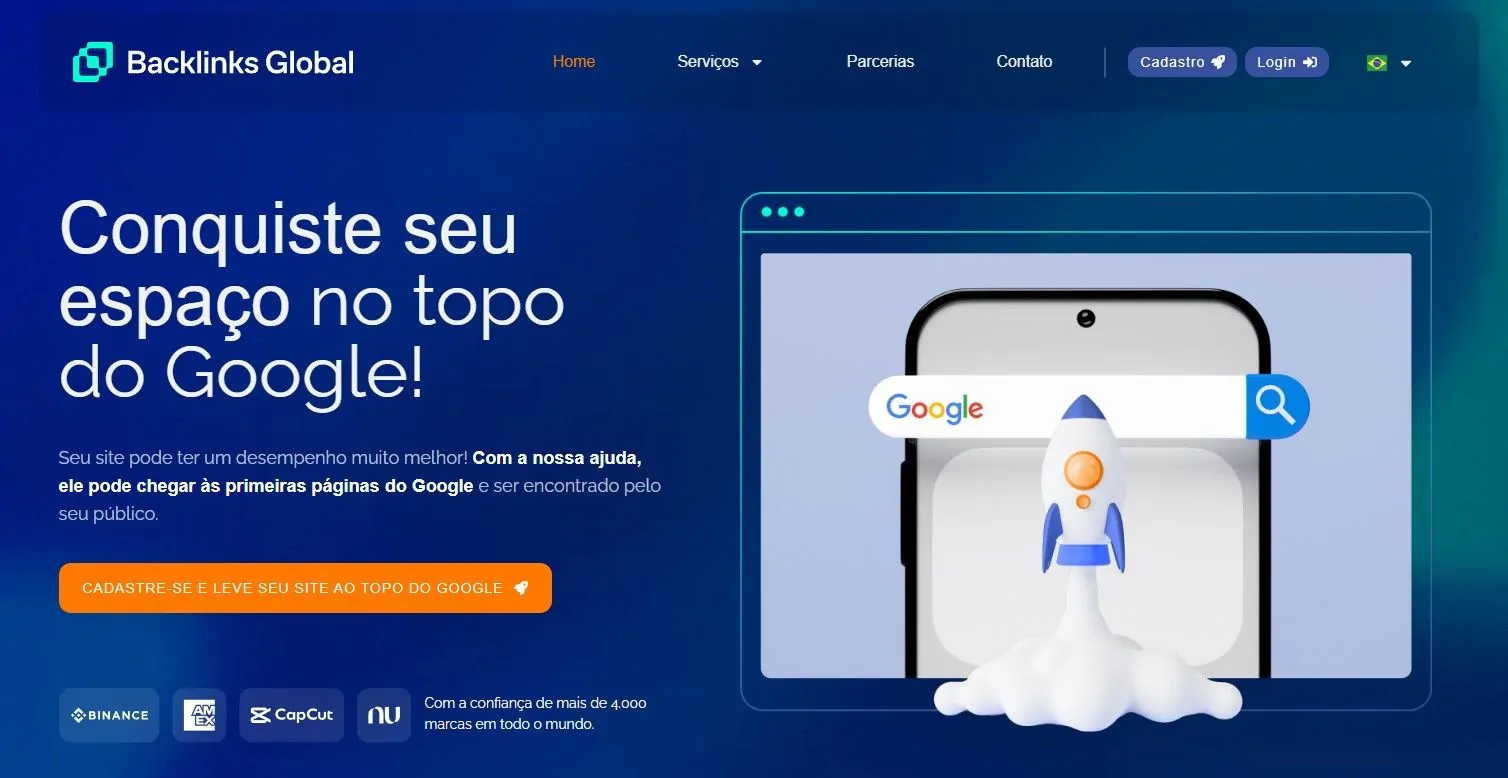
A Global Backlinks is a platform focused on backlink campaigns and editorial mentions with international operations. Unlike older marketplaces restricted to a single country, it positions itself as a solution aimed at global operations, serving brands, affiliates and agencies that need to publish in multiple markets.
The platform's model is similar to that of other marketplaces: the user chooses sites based on metrics, requests publication and monitors the delivery status. The difference lies in geographical reach and the variety of languages available.
When Backlinks Global makes more sense
The platform is most commonly used when:
- The project involves international SEO
- There is a need for backlinks in different countries
- The strategy includes Digital PR and editorial content, not just technical links
- The agency works with global clients or international affiliates
Another important point is the focus on editorial curation. The sites listed follow minimum criteria of traffic, authority and context, which reduces common risks in purely automated strategies.
Points of attention
As with any international platform, prices can vary greatly depending on the country and type of site. In addition, global campaigns require planning of anchors, language and context, which should not be delegated to the platform alone.
2. WhitePress
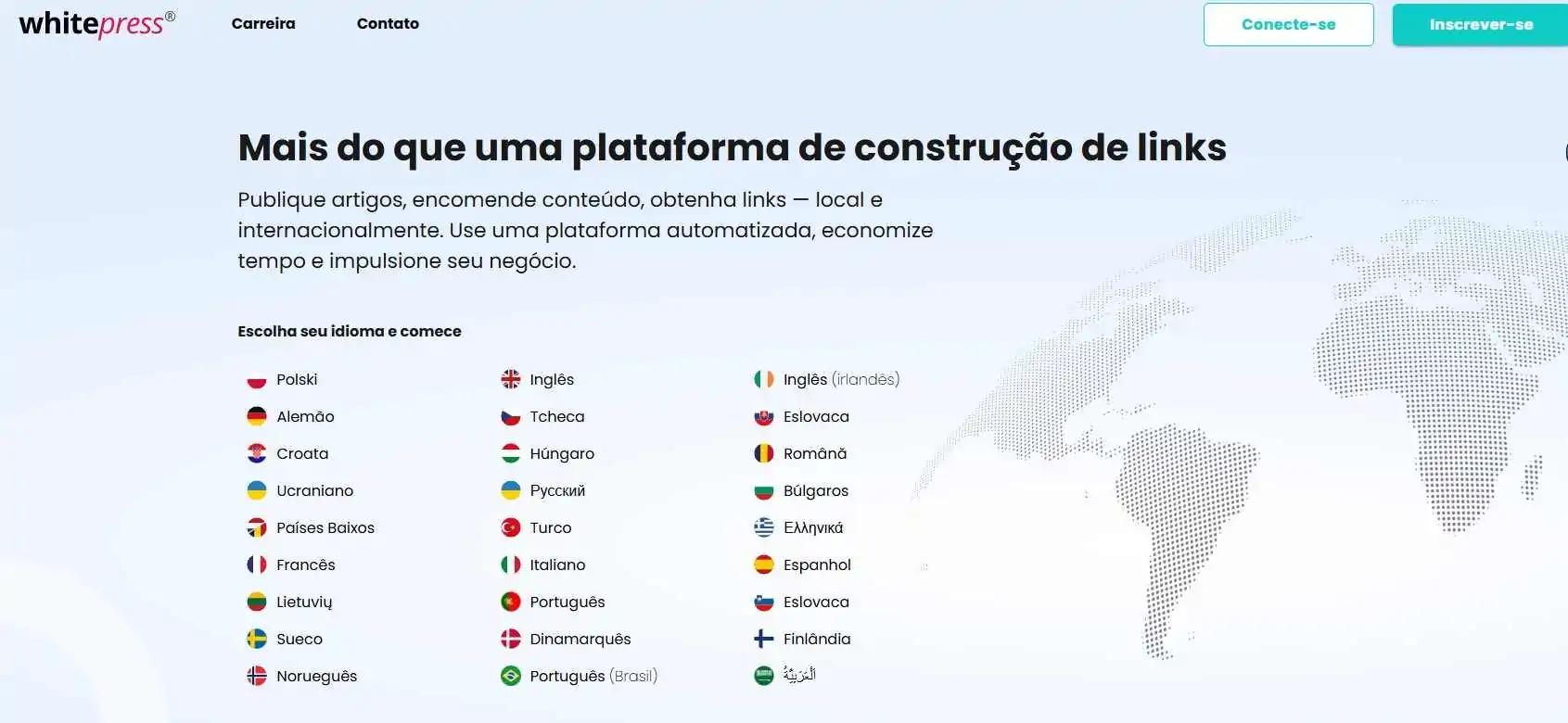
WhitePress is one of Europe's best-known platforms when it comes to guest posts and link building. Very strong in countries such as Poland, Germany, France, Spain and the UK, it has established itself as a benchmark for editorially focused sponsored content.
WhitePress offers a very detailed filter system, allowing you to choose sites by:
- Country
- Language
- Traffic
- Authority
- Editorial category
When WhitePress is a good choice
It usually works best for:
- Brands operating in the European market
- SEO strategies based on long content
- Campaigns that demand strict editorial control
- Agencies that already work with guest posts as a central pillar
The process tends to be more formal, with well-defined editorial rules and less room for improvisation.
Points of attention
In some markets, values can be higher. In addition, the platform is less flexible for sensitive niches or campaigns that require rapid adaptation.
3. Collaborator
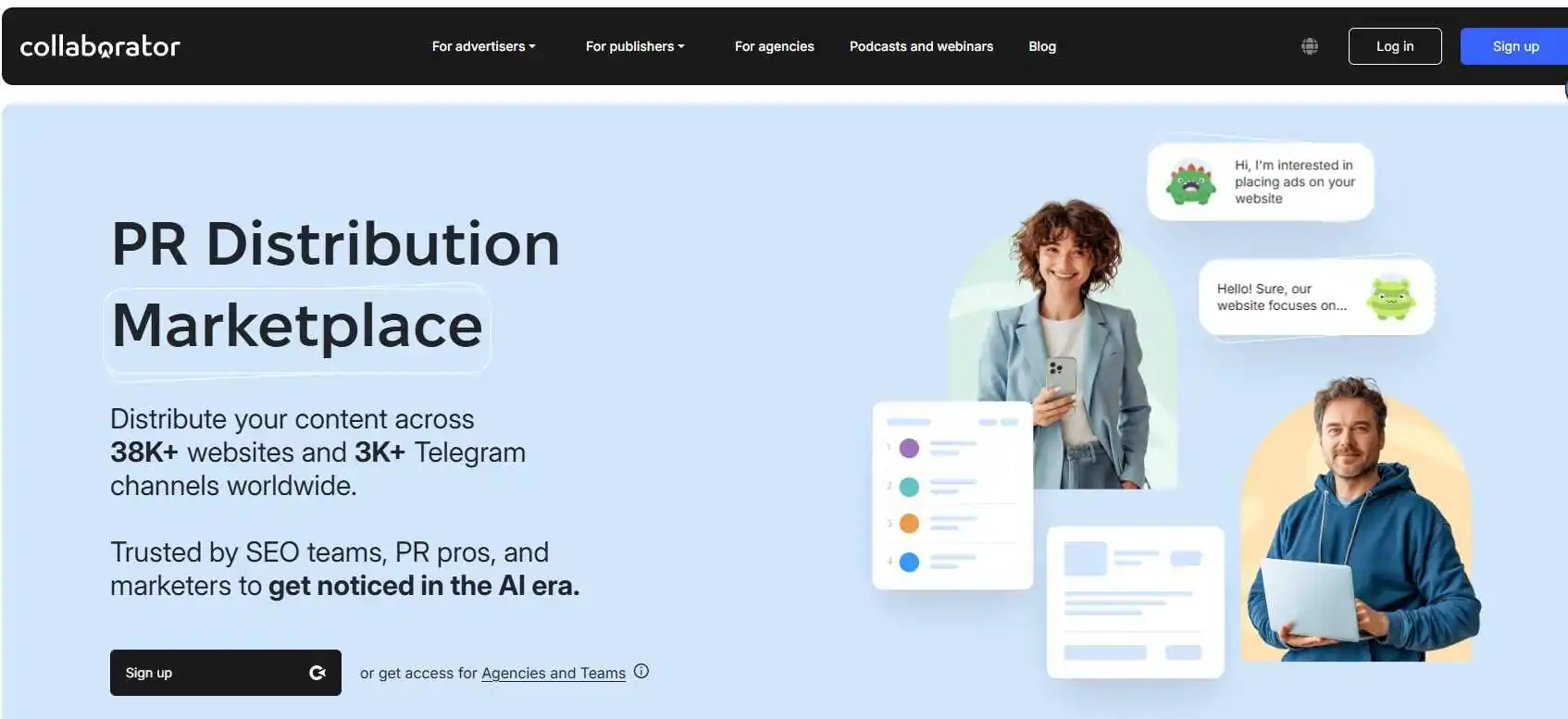
A Collaborator has become quite popular for offering a large base of sites in markets such as Eastern Europe, Latin America and part of Asia. The main focus is on guest posts and contextual links, with a more technical SEO-oriented approach.
The interface allows direct negotiations with publishers, which appeals to agencies that like to customize deliveries.
When the Collaborator stands out
It's a good option when:
- The budget is more controlled
- The project requires a moderate to high volume of links
- The strategy is focused on specific pages
- There is a need for direct negotiation with publishers
The platform is widely used by affiliates, niche projects and agencies that work with multiple clients at the same time.
Points of attention
Editorial curation can vary greatly from site to site. For this reason, manual analysis remains indispensable in order to avoid links with low contextual value.
4. Link Affinity
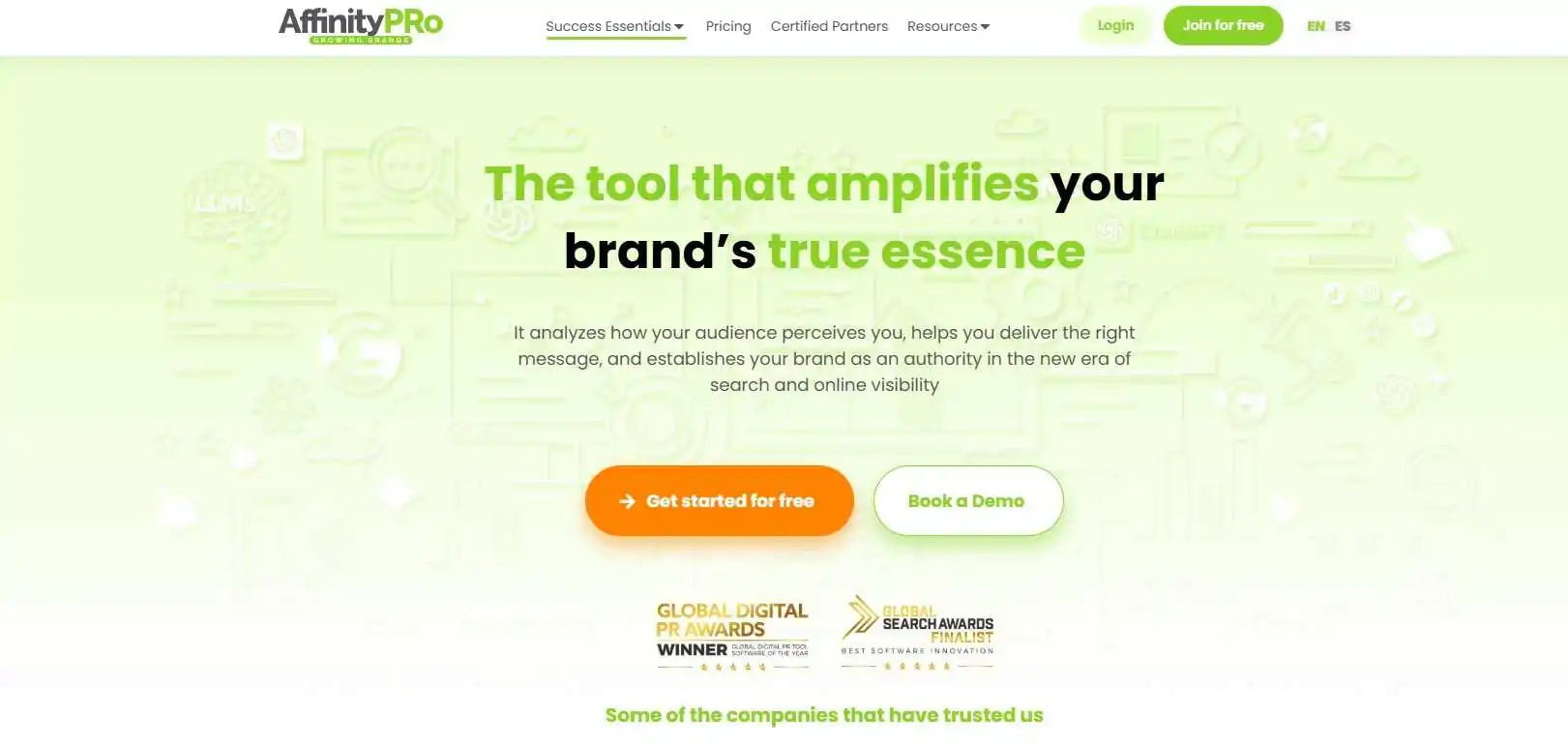
A Link Affinity has a slightly different proposal. Rather than just being an open marketplace, it works as a platform that combines technology, data and assisted outreach, helping to identify link opportunities that are more in line with the project's profile.
The focus is not only on buy links, but in creating rmore strategic editorial links.
When to use Link Affinity
It usually makes more sense when:
- The priority is quality over quantity
- The project requires strong thematic alignment
- There is concern about link footprint
- The team wants analytical support in the decision
It's common to see the platform being used by more mature SEO teams, especially in B2B or institutional projects.
Points of attention
It's not the easiest option for those starting out. Using it requires strategic understanding and continuous analysis of the data provided.
5. Bazoom
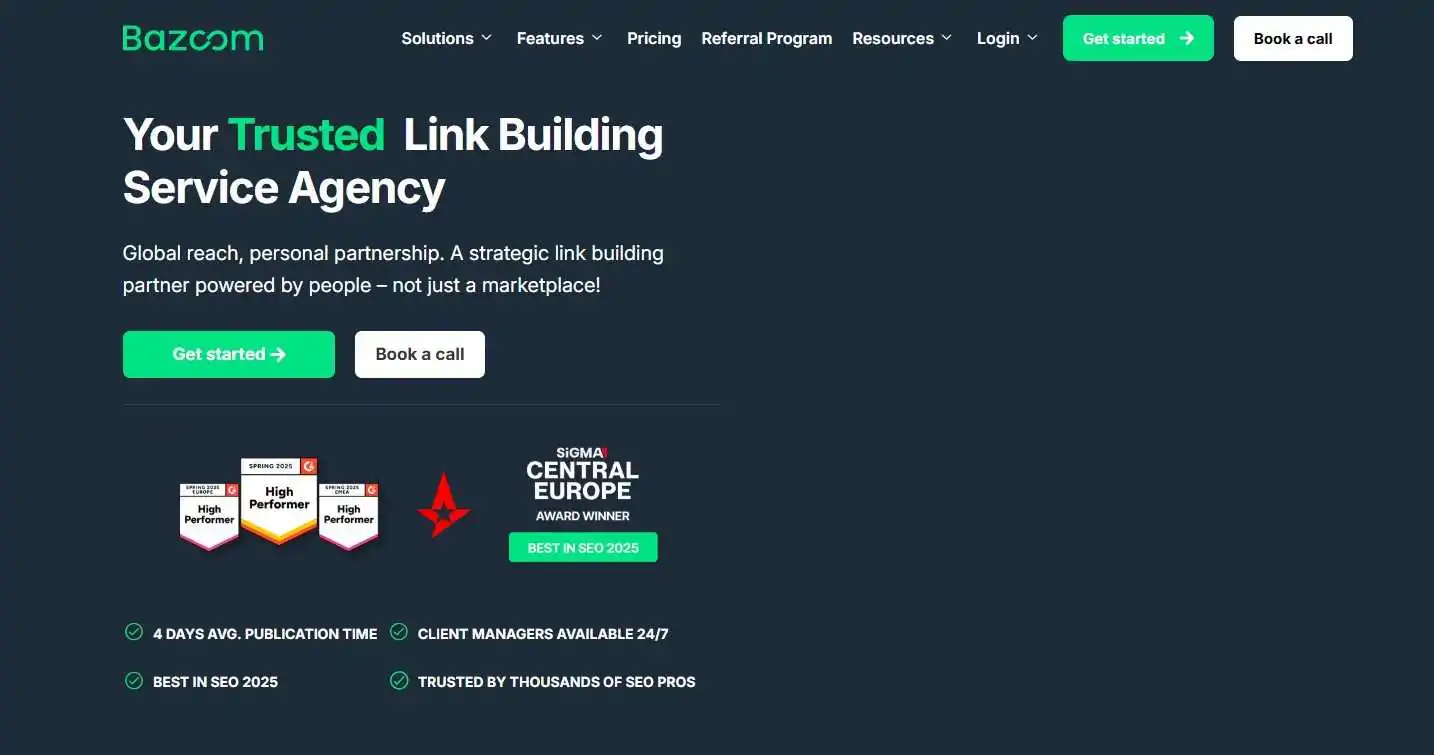
A Bazoom has gained ground in recent years as a European alternative focused on publishing sponsored content on authority sites. The platform is committed to simplicity and clear processes, with a strong presence in markets such as Denmark, Germany and other northern European countries.
When Bazoom works well
It is suitable for
- Combined branding and SEO campaigns
- Editorial content with an informative slant
- Projects that value predictability of delivery
- Agencies want less manual negotiation
The model is more direct, with less back and forth between advertiser and publisher.
Points of attention
Geographical coverage is more limited compared to global platforms. For campaigns outside Europe, it may not be enough on its own.
Practical comparison: when each platform makes the most sense
| Platform | Good for | Reach | Level of curation |
| Global Backlinks | International SEO and Digital PR | Global | Medium to high |
| WhitePress | More demanding editorial content | Global | High |
| Collaborator | Volume and cost control Global | Global | Variable |
| Link Affinity | Lots of website offers | Global | High |
| Bazoom | Many international sites | Global | Medium |
What really matters when choosing a link building marketplace
Regardless of the platform used, certain criteria remain decisive for a link building strategy to generate real results. It's not enough just to look at superficial metrics or lists of available sites.
The points that most impact performance are:
- Thematic relevance of the sites, not just DR or traffic estimated
- Editorial context in which the link will be inserted, avoiding artificial publications
- Conscious control of anchors and URLs, without forced patterns
- Delivery traceability, with Clear and indexable final URLs
- Alignment with the objective of the project, be it SEO, branding or both
Marketplaces facilitate operations and access to vehicles, but they are no substitute for strategy. A common mistake is to treat these platforms as automatic solutions, when in practice they are just the means, not the plan.
Marketplaces help, relationships reduce costs
A little-discussed point is that the prices charged on link building marketplaces are often inflated. This is because the platform adds fees, commissions and operating costs that don't always make sense for companies looking for scale or recurrence.
UpSites has direct relationships with platforms such as Backlinks Global, WhitePress, Collaborator, Link Affinity and Bazoom, as well as direct contact with many publishers outside these environments. In practice, this allows us to negotiate more competitive rates, prioritize more cost-effective vehicles and put together more financially efficient strategies.
For companies that prefer to save money without sacrificing quality, it's also possible to structure publication packages, combining different sites and markets, with more adjusted values than those found directly on the platforms.
An ecosystem, not an isolated solution
There is no single marketplace that is ideal for all projects. More mature strategies tend to combine different platforms, countries and publishing formats, using each resource according to the specific objective of each campaign.
Link building is no longer a one-off action. Today, it is part of a larger ecosystem involving content, reputation, editorial context and long-term vision. Marketplaces help organize this process, but success remains directly linked to the quality of the strategic decisions behind each link and the way these channels are used.
Click on the button below and get a quote for a tailor-made package for your company right now:
Get a quote for links
Frequently Asked Questions
What are the main advantages of using link building platforms?
Platforms make the operational process easier, offering quick access to hundreds or thousands of sites, filters by metrics, categories and countries, as well as greater control over deadlines and deliveries. For those who need to run campaigns at scale or test new markets, marketplaces greatly reduce prospecting time.
Are link building marketplaces safe for SEO?
Yes, as long as they are used judiciously. The risk is not in the platform itself, but in the choice of sites and the way links are inserted. Links published in forced editorial contexts, on sites with no thematic relevance or with a poor track record can generate poor results or even damage the project.
What should I analyze before buying links on a marketplace?
Before hiring, it is important to assess the thematic relevance of the site, the editorial context of the link, whether the content will be indexable, the type of anchor allowed and whether the final URL will be delivered transparently. Metrics such as DR and traffic help, but they shouldn't be the only decision criteria.
Are the prices on link building marketplaces fair?
Not always. In many cases, the amounts are inflated by the platform's own fees. For one-off purchases, this may be acceptable, but for recurring or volume campaigns, the cost can be high. For this reason, many companies choose to work with agencies that have a direct relationship with the platforms or publishers, thus obtaining better commercial conditions.
Is it worth using an agency instead of buying directly from the marketplace?
For those without experience, yes. A specialized agency helps you choose the right sites, avoids common mistakes, negotiates more competitive prices and aligns the link strategy with the real objectives of the business. It can also combine different platforms and direct contacts, optimizing cost and results.
Can I use just one marketplace for my entire link building strategy?
It's not ideal. Each platform has strengths in different markets, languages and types of site. More consistent strategies usually combine multiple marketplaces and direct contacts, using each channel strategically, depending on the campaign objective, the country and the profile of the target audience.

Lucas Pelisari
Lucas Pelisari has been an SEO and content specialist at UpSites for over 6 years, working on the creation and optimization of digital strategies focused on lead generation and organic growth.With experience in website development projects, on-page SEO and link building, he works directly on structuring content and pages aimed at positioning on Google and acquiring qualified traffic.Throughout his career, he has worked on projects for companies such as Kommo, Aldanth, Physical Care, In4, Design.com, Adaptive, Clipto and YeSim, as well as several other clients served by UpSites.He works on projects in different niches, including technology, SaaS, services and local businesses, with a focus on performance, conversion and scalability.Her work is directly linked to lead growth and increased organic visibility, with projects that have seen consistent traffic gains after implementing SEO and content strategies.His content covers topics such as professional website creation, SEO, page structure, performance, user experience and digital growth strategies, always with a practical approach based on real market scenarios.Professional networks:LinkedIn: https://www.linkedin.com/in/lucas-widmar-pelisari-78920033/Instagram: https://instagram.com/lucaswidmar
See all posts



 Calculate Price Now