

Best SEO techniques to index your site on Google
Summary (TL;DR)
Throughout this article, we explore the crucial facets of SEO, uncovering fundamental strategies and techniques to ensure that your website not only achieves a top position on Google, but also maintains that position over time.
From meticulous keyword research, through On-Page and Off-Page optimization, to creating quality content and implementing solid technical SEO practices, each aspect discussed plays a vital role in building a robust and effective online presence.
We highlight the importance of a responsive website, loading speed, the strategic use of SEO tools such as Google Analytics and Google Search Console, and the need for constant monitoring and updating to adapt to changes in Google's algorithms.

Being present in the digital world means bringing online visibility to your company. That's why SEO techniques to index your site on Google becomes very important.
Here at UpSites, we firmly believe that Search Engine Optimization (SEO) is the master key to unlocking this visibility.
That's why today we want to share with you the best SEO practices that we've applied over the years and that help index your site.
Did you know that SEO can make a difference to how long it takes for a website to be indexed on Google? Good SEO can speed up this process, but if poorly applied, it can delay or even penalize your site.
Let's dive into the strategies that transform websites from invisible to unforgettable, ensuring you get the traffic and attention your business deserves.
Keyword research
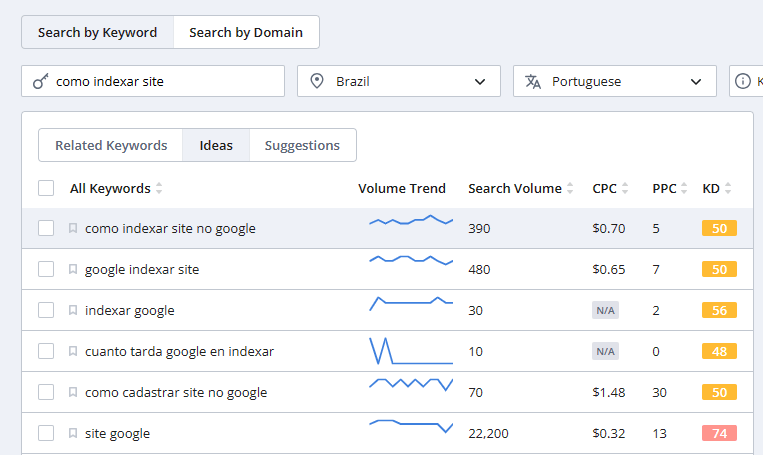
Image of the SEO Base tool
We deeply understand that the heart of a SEO strategy is the right choice of keywords.
They guide not only the content we produce but also how that content is discovered by users in the vast world of the internet.
When well selected, keywords act as bridges that connect your site to potential customers who are looking for exactly what you have to offer.
To get started, we recommend using keyword research tools such as Google Keyword Planner, SEMrush, Seo Base e Ahrefs.
These tools not only help identify terms and phrases relevant to your business but also provide valuable insights into search volume, competition and keyword trends.
With this data in hand, you can make informed decisions about which keywords are most valuable for your SEO objective.
However, choosing effective keywords goes beyond simply opting for those with the highest search volume. It is crucial to consider the intent behind users' searches.
Ask yourself: “What does my target audience really want to know or find when they type these words into Google?” Prioritize keywords that align not only with the content of your site but also with the needs and interests of your audience.
Here are some quick tips for choosing effective keywords:
- Focus on relevanceSelect keywords that truly reflect the content and offer of your site.
- Consider the competition: Keywords with high competition can be more difficult to rank for. Strike a balance between search volume and competition.
- Don't ignore long-tail keywords: These are more specific and less crowded, and often convert better because they reflect more precise search intentions.
- Use keyword research tools: They are essential for providing accurate data that will help guide your choices.
We know that every word you choose is another step towards the online success of your business, and the choice process needs to be made intelligently.
On-page optimization
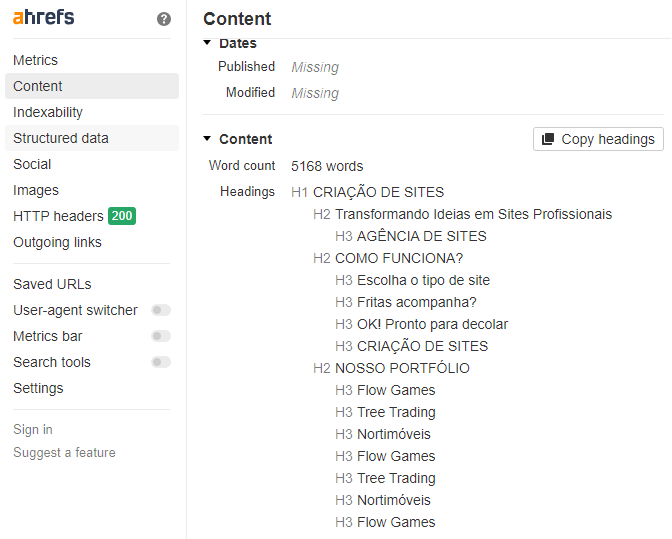
tool used AhRefs
On-page optimization is a fundamental pillar of the SEO strategy we implement here at UpSites.
This process involves improving various elements within your site to ensure that it is not only found by Google but also offers an exceptional user experience.
After all, the aim is to make your site as friendly to search engines as it is to visitors.
What is on-page optimization?
Simply put, On-Page optimization refers to all the measures we can take directly within the site to improve its position in search engines.
This includes adjustments to the content, the site structure, in the HTML tags, among other elements.
It's a way of telling Google exactly what each page on your site is about and how it can be useful to users.
Techniques for optimizing titles, metatags and alt attributes of images
- Titles: Each page on your site should have a unique and descriptive title, including the keyword for which you are trying to rank. The title should be attractive and informative, as it is one of the first things users see in search results.
- Metatags: Although meta descriptions do not directly influence ranking, they are essential for increasing the click-through rate (CTR) in search results. A good meta description should clearly and concisely summarize the content of the page, including the target keyword and encouraging the user to click.
- Alt attributes of images: Alt attributes are alternative texts for images, which help search engines understand the content of the images. As well as being good accessibility practice, inserting relevant keywords into alt attributes can improve your site's visibility in image searches.
The importance of quality content and how to structure it for SEO
At Usites we tire of emphasizing: content is king. Quality content that is relevant and valuable to your target audience is the backbone of any successful SEO strategy.
But it's not enough just to create content; it needs to be structured in such a way that search engines can understand and value it.
- Use headings correctly: Structure your content using headings (H1, H2, H3, etc.) to organize and highlight important sections. This not only improves readability for your visitors but also helps search engines understand the hierarchy and relevance of the content.
- Short paragraphs and accessible language: Keep paragraphs short and use clear language. This makes it easier to read and helps keep the user engaged.
- Include keywords in a natural way: Use keywords in a natural and relevant way throughout the text, without overdoing it. Excessive keyword stuffing can harm your ranking.
- Internal links: Use internal links to connect different pages of your site, helping to distribute PageRank value across the site and keep users engaged for longer.
A careful approach to On-Page optimization is crucial to achieving and maintaining top positions on Google.
That's why we dedicate time and expertise to ensuring that every aspect of your site is aligned with the SEO best practices, from the structure of the site to the last alt attribute of the image.
Fast solution for website indexing: SCP Turbo
Well, if you've come this far and need a quick solution that involves less work to index your pages, we have a simple and quick solution for you to apply right now.
This is the tool SCP Turbo, You can index any page quickly and optimally with just a few clicks.
Once you have registered and logged in to the tool, you can insert your website. The process is very simple. Once your site is registered, it starts working and your pages will soon be indexed.
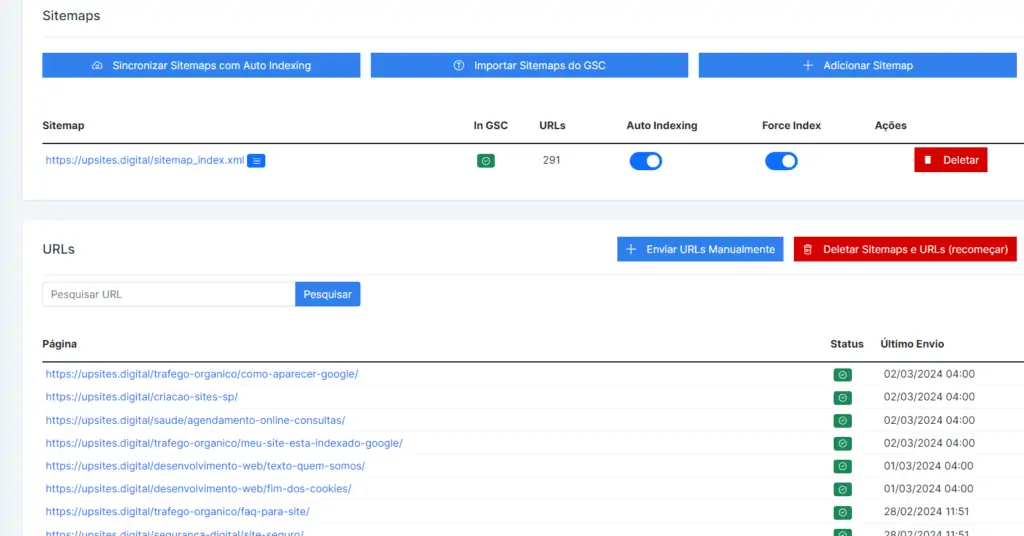
Example of using the SCP Turbo tool
Did you find it interesting? Click on the button below and use the tool right now!
Technical SEO
Technical SEO is another essential aspect of website optimization that is often overlooked.
This is the foundation that allows search engines like Google to crawl and index your site effectively, ensuring that it can be found by users.
Without a solid technical foundation, even the most incredible content and the best thought-out keyword strategies may not reach their full potential.
Meaning and relevance of technical SEO
Technical SEO encompasses a variety of practices aimed at improving your site's infrastructure.
This includes optimizations that help search engines better understand the content of your site and how it is structured, as well as ensuring a positive experience for users.
When done well, technical SEO can significantly increase the chances of your site ranking well in search results.
Tips for improving website loading speed
Site speed is a crucial factor for both SEO and user experience.
Sites that load quickly have higher conversion rates and are more favored by search algorithms.
Here are some measures we take at UpSites to ensure that your sites load quickly:
- Image Optimization: Make sure all images are the correct size and compressed for the web.
- Cache usage: Implement caching solutions to reduce page load times.
- Minification of CSS, JavaScript and HTML: Remove unnecessary spaces, comments and line breaks from the code to reduce file size.
- Choosing a Good Hosting Service: The quality of your hosting provider can have a big impact on the speed of your site.
The importance of a responsive website for mobile devices
With the growing use of smartphones and tablets to access the internet, having a responsive website that adapts perfectly to any screen size is indispensable. Responsive sites not only offer a better user experience but are also favored by Google, especially since the implementation of the mobile-first index.
How to use the robots.txt file and the canonical tag properly
- File robots.txt: This file is used to tell search engines which parts of your site they can and cannot crawl. You need to ensure that the robots.txt file is set up correctly to avoid indexing duplicate or irrelevant pages.
- Canonical tag: The canonical tag is used to indicate the preferred version of a similar or duplicate page. This helps prevent duplicate content problems by directing search engines to the page you consider most important.
Through a detailed and technical approach, we ensure that your site is not only perfectly optimized for search engines but also offers an exceptional experience to your users.
Our goal is to build a solid foundation on which all other SEO strategies can successfully stand.
Off-page optimization
Off-page optimization is also a vital component of a comprehensive SEO strategy.
While On-Page optimization focuses on improving elements within your site, Off-Page optimization concerns actions taken outside your site to improve your position in search engines.
This aspect of SEO is fundamental because it helps to build your site's authority, increasing its visibility and credibility on the web.
Link building strategies
Link building is one of the most effective Off-Page optimization strategies.
Links from external sites act as “votes” in favor of the quality and relevance of your content. However, not all links are created equal.
We always focus on getting high-quality links from reputable sites that are relevant to our client's niche. Here are some of the strategies we use:
- Quality content: Creating valuable and shareable content is the basis for earning links naturally.
- Guest posting: Writing guest articles on relevant blogs can be a great way to get quality backlinks.
- Broken link building: Identify sitelinks broken on other sites and offer your content as an alternative to replace them.
- Partnerships and relationships: Building relationships with other companies and influencers in your sector can lead to natural link building opportunities.
The importance of social networks and how they can help SEO
Although social media links don't directly contribute to your site's ranking in the same way as traditional backlinks, they do play a crucial role in off-page optimization. An active presence on social networks can:
- Increase the visibility of your content: Sharing your content on social networks increases its reach, which can lead to more natural links from other sites.
- Improve engagement: Interaction on social networks can increase engagement with your content, signaling to search engines that it is valuable to users.
- Help build the brand: A strong presence on social networks helps to build brand recognition and trust, important elements for the authority of the site.
At UpSites, we integrate Off-Page optimization strategies into our SEO plans to ensure that our clients' websites not only achieve, but also maintain a prominent position in search results.
We understand that building online authority goes beyond your own website, involving a holistic approach that includes building quality links and an active and strategic presence on social networks.
Quality and relevant content
Creating content that is both relevant and useful to your target audience is crucial not only for attracting visitors to your site, but also for keeping them engaged and converting them into loyal customers.
The relevance and quality of content are determining factors for online success, directly impacting both SEO and user engagement.
The importance of creating relevant and useful content
Relevant and useful content addresses the needs and questions of your target audience, providing real value.
When users find the answers they're looking for on your site, it not only satisfies their immediate queries, but also establishes your brand as a trusted authority in your niche.
This generates trust and credibility, crucial elements for building a lasting relationship with your audience.
How quality content affects SEO and user engagement
From an SEO point of view, high-quality content is one of the main factors that search engines like Google use to determine a site's ranking.
Well-written, informative and up-to-date content is more likely to receive backlinks from other sites, an important sign of authority for Google.
Engaging content increases the time spent on the site, reducing the bounce rate and signaling to search engines that your site offers value to visitors.
Tips for creating an effective editorial calendar
- Know your target audience: First of all, it is essential to understand who your target audience is, what they are looking for, and what problems they need to solve. This information will guide the creation of relevant content that resonates with your readers.
- Search for keywords: Use keyword research to find topics that your target audience is searching for. Not only will this help drive traffic to your site, but it will also ensure that the content is highly relevant.
- Plan ahead: An editorial calendar helps to organize content production strategically, ensuring consistent publication. Plan topics, publication dates and content creators in advance.
- Diversify your content formats: Vary the formats of your content between blog posts, videos, infographics and podcasts to meet the different consumption preferences of your audience.
- Analyze and adjust: Use analysis tools to monitor the performance of your content. See what works well and adjust your strategy as necessary.
We are dedicated to creating content that not only captures the attention of your target audience, but also keeps them engaged and motivated to act. That's part of our secret to success.
We understand that quality content is the backbone of any successful digital marketing strategy, which is why we put so much emphasis on creating an effective editorial calendar that guides our content production.
Our goal is to ensure that each piece of content not only meets SEO expectations, but also provides real value to your readers, establishing your brand as a leader in your sector.
Use of SEO tools
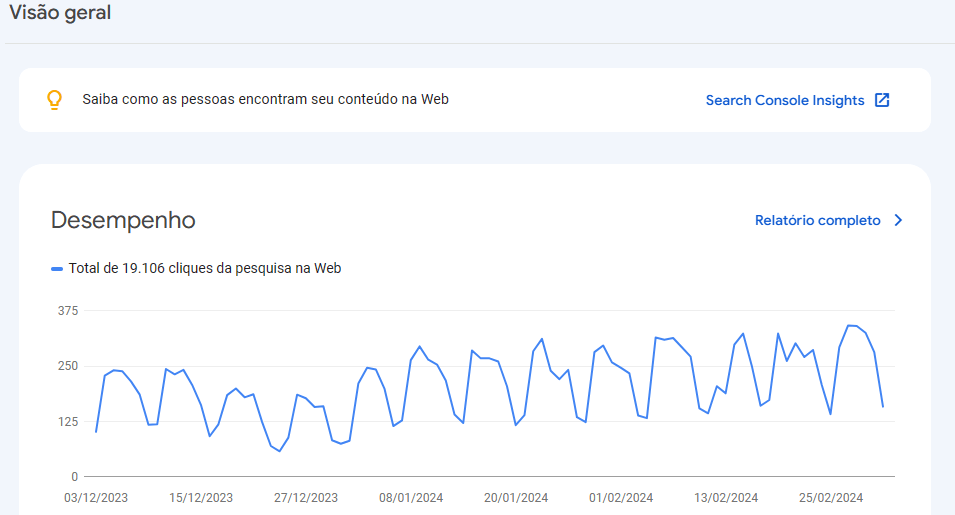
Image taken from our Search Console
Using the right SEO tools to continuously analyze and optimize your site is another strategy that makes a difference.
These tools are crucial for understanding how your site is performing, identifying areas that need improvement and monitoring the effectiveness of the strategies implemented.
I'm going to highlight some of the essential SEO tools and explain how you can use the Google Analytics and Google Search Console to monitor your site's performance.
Essential SEO tools
- Google Analytics: This is an indispensable tool for any SEO professional. It offers detailed insights into your site's traffic, including information about visitors, how they found your site and how they interact with the content. Using Google Analytics helps you understand user behavior, allowing you to optimize your site to improve the user experience and increase conversions.
- Google Search Console: Another vital tool, Google Search Console allows you to see how Google views your site. It provides data on your site's search performance, including impressions, clicks and average position in search results. In addition, it alerts you to any indexing or usability problems on mobile devices, helping to keep your optimized website for search engines.
- SEMrush: SEMrush is an all-in-one tool that offers a wide range of features for keyword research, competition analysis, SEO auditing and much more. It is extremely useful for planning content and website optimization strategies.
- Ahrefs: Similar to SEMrush, Ahrefs is a powerful tool for backlink analysis, keyword research and competitive analysis. Its extensive database is excellent for understanding your site's backlink profile and identifying link building opportunities.
Monitoring your site's performance with google analytics and Google Search Console
- Using Google Analytics: To monitor your site's performance, set up goals in Google Analytics to track specific conversions, such as newsletter sign-ups, e-book downloads or purchases. Analyze the acquisition reports to understand where your traffic is coming from and which channels are generating the most engagement and conversions. The behavior report offers insights into the most visited pages and the average time on page, helping to identify which content is performing best.
- Using Google Search Console: Check the performance report regularly to analyze the keywords that are bringing traffic to your site. Pay attention to usability problems reported by Google, especially for mobile devices, and correct them promptly. Use the URL inspection tool to check how Google sees specific pages on your site, ensuring that they are being indexed and crawled correctly.
At UpSites, we use these tools to ensure that we are always one step ahead, optimizing our sites effectively and keeping them in line with SEO best practices.
We believe that continuous analysis and strategic adjustments based on data are fundamental to the success of any SEO strategy.
Conclusion
Today we explore a series of fundamental SEO techniques that are crucial to ensuring that your site is not only indexed by Google, but also ranks well.
We understand the importance of a comprehensive SEO strategy, which includes everything from keyword research to the technical optimization of the site, through the creation of relevant and useful content, to Off-Page optimization strategies and the effective use of SEO tools.
We recognize that search engine optimization is a complex and constantly evolving field that requires a thorough understanding and careful implementation of best practices.
We at UpSites encourage you to implement these techniques and dedicate yourself to continually improving your SEO strategy.
Remember that SEO is not a quick fix, but an ongoing process that requires time, dedication and consistency.
Keeping up to date with the latest trends and changes in Google's algorithms is equally important. If a site does not appear on Google, The answer may lie in these algorithm changes.
Frequently Asked Questions
What is SEO and why is it important for my site's online visibility?
SEO, or Search Engine Optimization, is the set of practices designed to improve the visibility and ranking of a website in the search results of Google and other search engines. It's important because it helps increase the visibility of your site, attracting more visitors and potential customers, which can lead to the growth of your online business.
How can keyword research influence the indexing of my site on Google?
Keyword research is essential for identifying the terms and phrases that your target audience is searching for. Choosing relevant keywords with good search intent helps you target your site's content, increasing your chances of appearing in search results. Tools such as Google Keyword Planner, SEMrush and Ahrefs can provide valuable insights into search volume and keyword competitiveness.
What are the best on-page optimization practices to improve my site's SEO?
On-page optimization best practices include:
- Use of descriptive titles and metatags that include keywords.
- Creating high-quality content that is relevant to the target audience.
- Correct use of headings (H1, H2, H3) to structure content.
- Optimization of image alt attributes for accessibility and SEO.
- Implementation of internal links to improve navigation and visitor retention.
What is technical SEO and how does it impact my site's performance on search engines?
Technical SEO involves optimizing your site's infrastructure to make it easier for search engines to crawl and index it. It includes practices such as:
- Improved site loading speed through image optimization, use of caching and file minification.
- Correct configuration of the robots.txt file to control what search engines can crawl.
- Use of canonical tags to avoid duplicate content problems. Well-done technical SEO ensures that your site is accessible and understandable to search engines, improving your chances of ranking well.

Lucas Pelisari
Lucas is an SEO specialist at UpSites. He has helped several companies climb the google rankings and is always improving his skills. He is also a digital marketing enthusiast and always tries to keep up to date with the digital world.
See all posts


 Calculate Price Now