

AI Applied to Semantic SEO: How AI is Changing Keyword Strategy
Summary (TL;DR)
In this post, we talk about the role of Artificial Intelligence (AI) in Semantic SEO and how it transforms the way we understand and apply keywords in optimization strategies.
AI, with its advanced understanding of language and context, makes it possible to identify the user's search intent, providing more accurate search results and more relevant content. With the prediction that the majority of online content will be generated by AI by 2026, it is clear that Semantic SEO is an essential trend for improving the visibility and performance of websites in search engines.
We also address the benefits and challenges of AI in SEO, including increasing organic traffic, personalizing content and the need for high-quality data to optimize results.
Despite the difficulties, such as data quality and the need for AI training, the use of AI-based algorithms makes SEO more efficient by finding keywords with high engagement potential and aligned with user intent, ensuring that companies stay ahead of search trends.
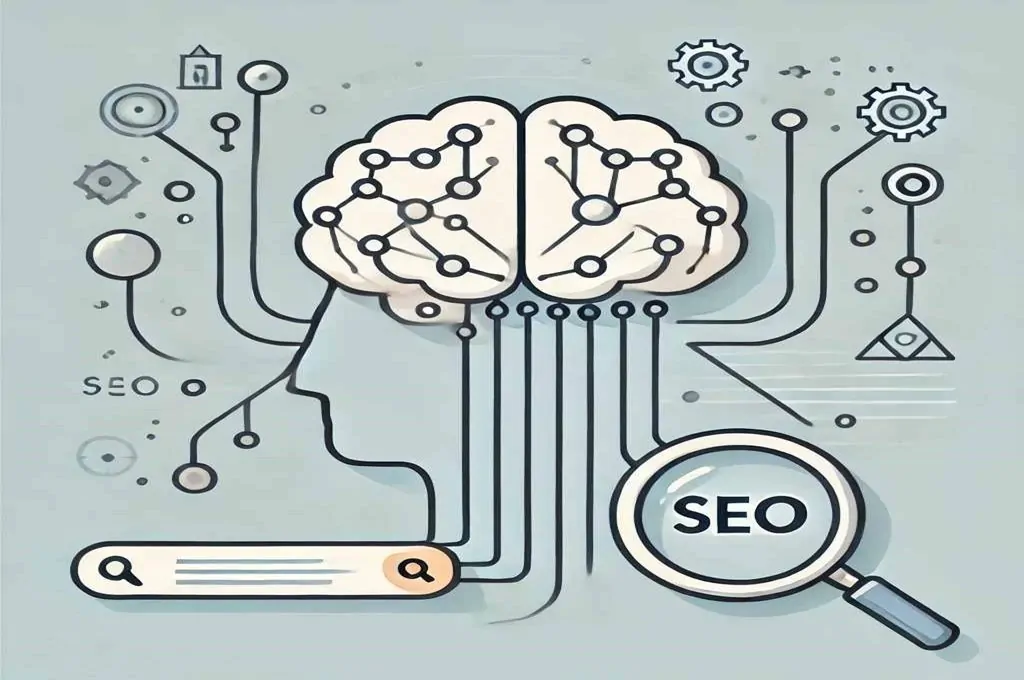
As we enter 2024, we wield a powerful weapon: Artificial Intelligence, also known as AI. AI Applied to Semantic SEO is a new form of SEO, and it is setting the pace and revolutionizing the way we deal with keyword strategy thanks to its ability to interpret human language and its context. It is predicted that 90% online content is generated by artificial intelligence by the end of 2026.
The archaic method of overloading web content with keyword associations is simply no longer enough. Keyword bombardment has come to an end.
Instead, Semantic SEO harnesses the power of AI to distinguish the genuine underlying intent of the user's search, offering more pertinent results. AI significantly reduces keyword search time, improving the relevance of content and increasing the overall effectiveness of SEO endeavors.
Due to its ability to understand context, semantics and user intent, AI increases the accuracy and personal tailoring of search results, considerably refining the overall user experience.
In this article, we'll investigate the exciting subject of Semantic SEO, delving into the innovative way in which AI continues to reshape keyword strategies.
What is Semantic SEO
Although the world of SEO is constantly undergoing drastic changes due to AI, keyword research remains important. Today, the goal is to promote engaging interactions and make your voice heard amidst the vast amount of information available.
O Semantic SEO is a strategy that emphasizes the underlying meaning and intent of user search queries, rather than focusing solely on keyword entries. It uses AI techniques and natural language processing (NLP) to make search engines understand the contextual meaning and semantics of the content. This approach offers more relevant and highly accurate search results, supported by a Magento hosting reliable.
Semantic SEO: Benefits and Challenges of Using AI
In short, AI makes it easier to understand what users want, allowing you to better personalize your content and stand out in search engine results.
Positive Aspects of Using AI in Semantic SEO
- Greater Online Presence. You can extend the reach of the search queries in which your content appears and increase your online visibility. Understanding user intent and context will allow you to attract more organic viewers and boost your search engine rankings.
- Improving User Experience. Understanding the underlying reasons for searches allows search engines to offer more personalized and appropriate results. This feature improves the user experience by helping them find the exact information they are looking for without relying on precise keywords.
- Ahead of Future Trends. By focusing on the general topic and user intent, rather than specific keywords, you ensure that your site maintains relevance and visibility in search results.
- Highest Ratings. Semantic SEO helps search engines accurately understand web page content. Providing search engines with structured data markup and the appropriate semantic signs increases the chances of your site ranking higher in the relevant search results, as well as increasing overall search visibility.
- Increased Organic Traffic. Semantic SEO increases organic traffic to your site when aligned with user intent and context. This attracts users who are truly engaged with your content, resulting in better engagement and conversion rates.
- Increased Content Quality. Incorporating semantic search requires a combination of data analysis and empathetic writing. By shifting the focus from mere keywords to their meaning and intent, Semantic SEO generates high-quality content that answers users' queries effectively. With the help of AI, it would be much easier to write content for blogs, for example.
Despite these advantages, understanding the limitations of AI is essential to its effective use.
AI in Semantic SEO: Difficulties in Use
Keyword Search Quality. AI provides keyword ideas that don't actually have sufficient ranking potential. It is therefore more effective to conduct keyword research with specialized SEO software, such as keyword generator from SE Ranking, which has comprehensive databases and advanced data processing algorithms.
As well as bringing together similar and related keywords with relevance scores, it quickly shows you the search volume, keyword difficulty score and cost-per-click (CPC) of keywords in various locations for a better understanding of the real need to use them and how you should use them in your strategy.
- Data Quality. For AI to work effectively, it needs data. However, if the data isn't accurate or of high quality, AI won't be able to create good SEO strategies. It is important to ensure that the data is reliable.
- AI training. In order to understand user intent and context, AI training is required. This requires time, data and specialized knowledge. Companies need to invest in AI training to ensure the content creation with your help. However, 71% of executives say that AI and machine learning are revolutionary and worth the investment.
How AI Is Changing Today's Keyword Strategy
As they evolve and become more sophisticated, AI-based algorithms allow search engines to decipher and understand the subtleties of human language, such as sentiment analysis. This transition promotes a more human-centered approach during the search request process.
In response to this development, greater emphasis is being placed on keyword strategies that are not only sophisticated, but contextually meaningful.
Content Optimization with AI
AI-based algorithms are transforming keyword strategy in SEO, allowing for a more intelligent and natural approach to content optimization. AI exists to provide contextually appropriate synonyms and related phrases.
According to the guidelines established in the Google Search Essentials, The main recommendation, formerly known as the Webmaster Guidelines, is to provide quality content that is meaningful to the end user, whether it's AI sales content or an AI blog post.
With its versatile technology, AI ensures that the content serves two main purposes: First, the content is optimized for search engine algorithms. Secondly, the content remains engaging, cohesive and attractive to readers. By harnessing the potential of AI in SEO in conjunction with systems such as C.R.A.F.T., companies find an effective balance between keyword relevance and improving the user experience.
Finding Top Performing Keywords
AI is excellent at identifying keywords. This is due to its understanding of the topics and themes of the content, not just the combination of keywords.
AI-based semantic SEO goes one step further than the typical keyword analysis. It analyzes the context of the keywords, their relevance to user searches and the way they connect with the topic of the site or the content as a whole. In this way, it not only finds popular short- and long-tail keywords, but those that actually engage the target audience and meet their search intent.
- AI checks various data sources in its analysis, including search engine results, user interaction data and competitors' content strategies.
- AI notices trends in user behavior, recognizing which keywords generate traffic and engagement and why.
- AI takes into account factors such as click-through rates, time on page and user interaction.
With this information, the AI in Semantic SEO identifies keywords that, as well as attracting visitors, encourage meaningful interactions. This leads to a more strategic method of keyword optimization, which focuses on keywords that really connect with the audience and increase the site's credibility and relevance in its field.
Ranking Keywords by Search Volume, Competition and Relevance
The AI in Semantic SEO investigates the deeper meanings and connections between words rather than just focusing on the keywords themselves. It makes use of NLP to understand the context and semantic relationships between terms. By studying content in this way, AI can identify the direct relevance of keywords and their related concepts and topics.
NLP analysis leads to a more complex and effective grouping of keywords based on their actual relevance, not just the frequency of search terms.
AI can evaluate the volume of research and the competition for each keyword. SEO tools AI-based search engines make use of historical data to predict search volume, helping to identify patterns in user behavior. To assess competition, AI analyzes factors such as the number and quality of other web pages competing for attention, giving a complete picture of how difficult it is to rank for a specific keyword.
By combining a semantic understanding with these quantitative metrics, the AI in Semantic SEO makes it possible to classify keywords more comprehensively and effectively.
Predicting Search Intention and User Behavior
One of the main advantages of using AI in SEO to formulate keyword strategies is its ability to predict user intent and subsequent behavior. AI effectively predicts what information the user is looking for by analyzing user data trends, previous search patterns and query history. This allows companies to synchronize their content with users' needs, resulting in the delivery of highly pertinent and valuable data.
When they understand user intent, companies can create content that doesn't just satisfy search engine algorithms, but connects firmly with the target audience.
Conclusion - AI Applied to Semantic SEO
In short, AI is revolutionizing the world of keyword strategy by providing companies with intelligent, data-driven insights. Through careful content optimization, AI ensures that keywords are naturally inserted into content and the appropriate context, benefiting search engine rankings and the user's reading experience.
AI-powered SEO tools help companies identify the most successful keywords and predict user search intent, thus enabling them to generate content that perfectly meets user needs. Considering the rapid advances in AI, its integration into keyword strategy will become increasingly essential for companies wishing to maximize their visibility on search engines and reach their target audience effectively.

Lucas Pelisari
Lucas Pelisari has been an SEO and content specialist at UpSites for over 6 years, working on the creation and optimization of digital strategies focused on lead generation and organic growth.With experience in website development projects, on-page SEO and link building, he works directly on structuring content and pages aimed at positioning on Google and acquiring qualified traffic.Throughout his career, he has worked on projects for companies such as Kommo, Aldanth, Physical Care, In4, Design.com, Adaptive, Clipto and YeSim, as well as several other clients served by UpSites.He works on projects in different niches, including technology, SaaS, services and local businesses, with a focus on performance, conversion and scalability.Her work is directly linked to lead growth and increased organic visibility, with projects that have seen consistent traffic gains after implementing SEO and content strategies.His content covers topics such as professional website creation, SEO, page structure, performance, user experience and digital growth strategies, always with a practical approach based on real market scenarios.Professional networks:LinkedIn: https://www.linkedin.com/in/lucas-widmar-pelisari-78920033/Instagram: https://instagram.com/lucaswidmar
See all posts


 Calculate Price Now