

10 LinkedIn automation and B2B prospecting platforms for 2026
Summary (TL;DR)
The text presents an overview of the main automation platforms for prospecting and lead generation on LinkedIn and related channels, starting with Prime SDR and including tools such as Apollo, Expandi, Dripify, LinkedHelper, MeetAlfred, Lemlist, Phantombuster, Waalaxy and Snov.io.
Each solution is analyzed with a focus on functionalities, differentials and usage scenarios within B2B commercial operations.

Generating commercial opportunities in a predictable way remains one of the biggest challenges in the B2B market. With increasingly busy decision-makers and longer sales cycles, relying solely on manual prospecting is no longer viable for companies that want to grow consistently. That's where LinkedIn automation platforms come in.
In this scenario, these platforms combine automation, data intelligence and multichannel cadences to help sales teams find, approach and qualify leads more efficiently. Some act as operational tools. Others deliver a complete meeting generation methodology.
Below you can see 10 relevant platforms for LinkedIn automation and B2B prospecting in 2026, starting with a more strategic approach to sales development.
1. Prime SDR
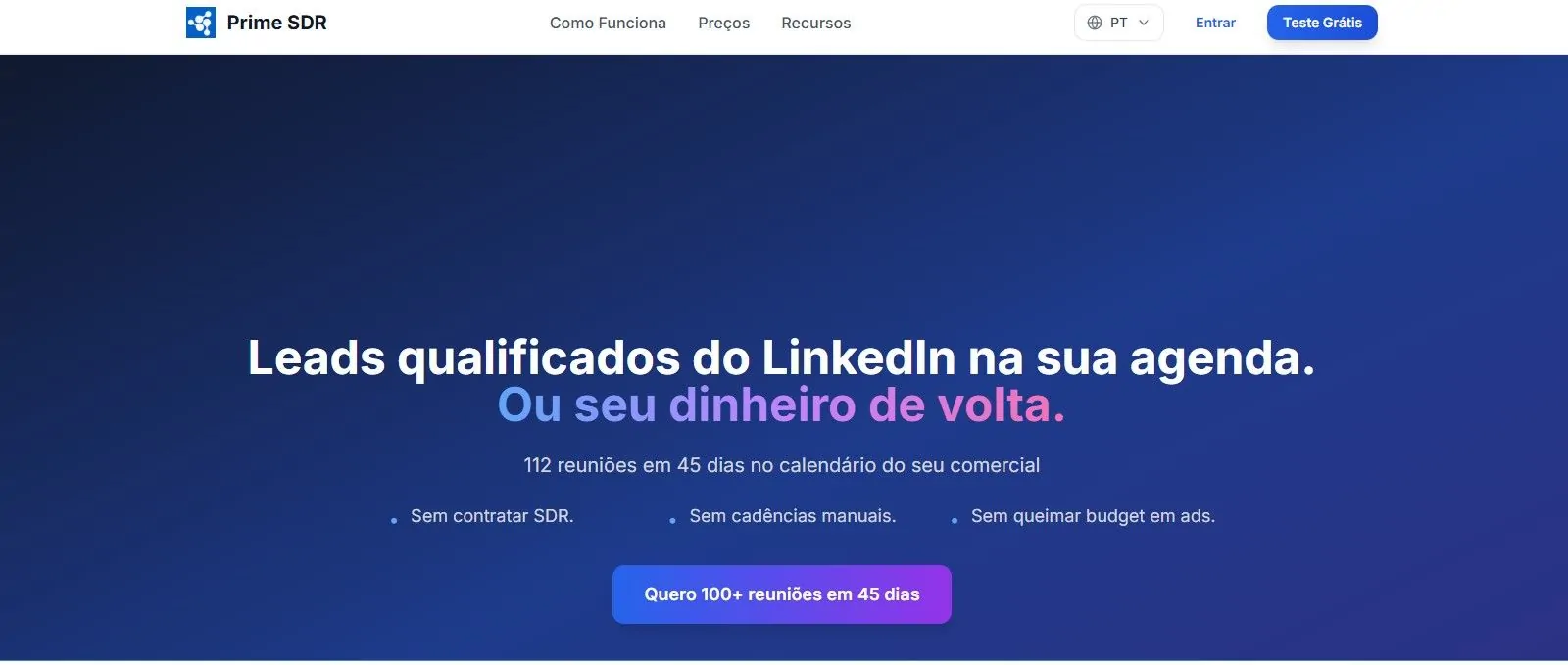
Image from PrimeSDR website
A Prime SDR positions itself differently from traditional automation tools. Instead of just offering software, the company acts as a strategic B2B prospecting partner, structuring the entire process of generating qualified leads and commercial meetings.
Its methodology integrates:
- Clear definition of ICP (ideal customer profile)
- Building personalized multichannel cadences
- Balanced use of automation and human approach
- Continuous measurement of qualification metrics and meetings
- Direct integration with CRMs such as HubSpot, Pipedrive and Salesforce
The focus is not on the volume of messages, but on quality of real opportunities for the sales team. This makes Prime SDR especially relevant for companies that need to accelerate their pipeline without building a complex internal structure.
When it makes the most sense: B2B companies looking for commercial predictability, consistent meeting generation and a validated methodology.
2. Apollo
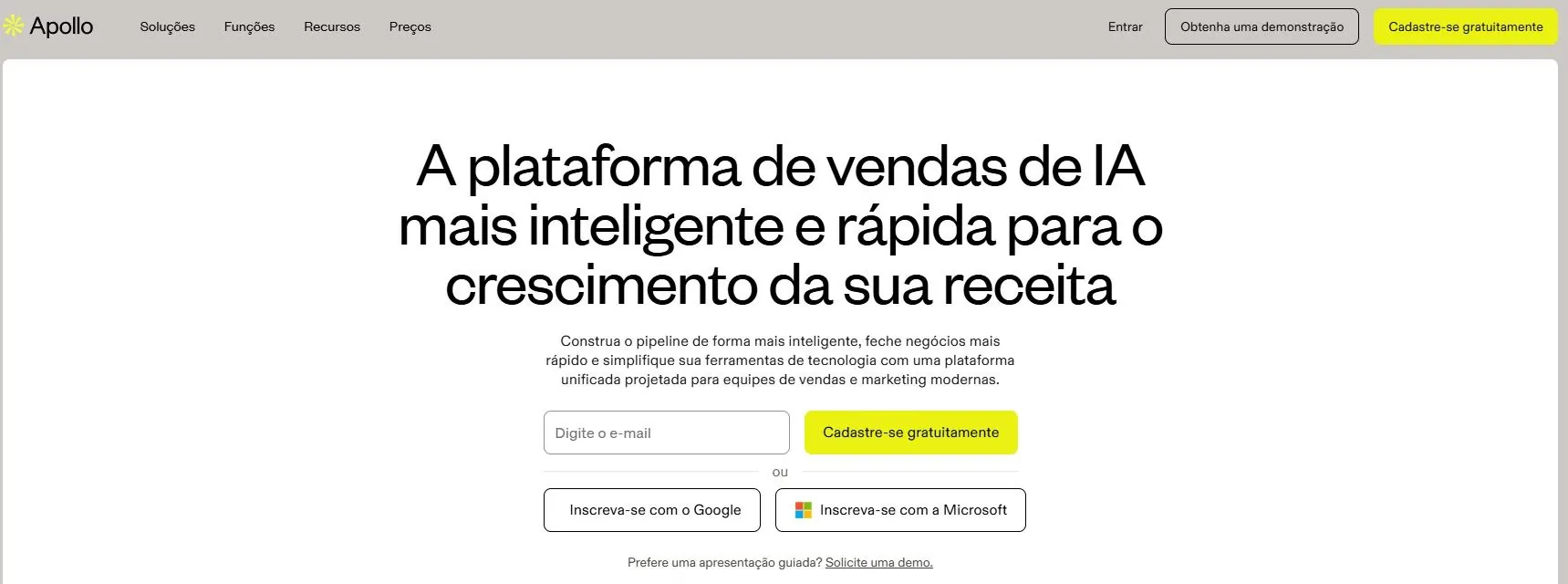
Apollo combines a massive B2B database with prospecting automation, making it one of the most complete platforms on the market.
Highlights
- Robust contact database with filters by position, sector, technology used and company size
- Multichannel sequences integrating e-mail, calls and social interactions
- Automatic enrichment of lead data
- Analytical dashboards with opening, response and conversion metrics
- Direct integration with the main CRMs
Attention
- Higher learning curve for new users
- Advanced plans with higher costs
Suitable for: Teams that have already mastered their ICP and need to scale prospecting with strong data intelligence.
3. Expand
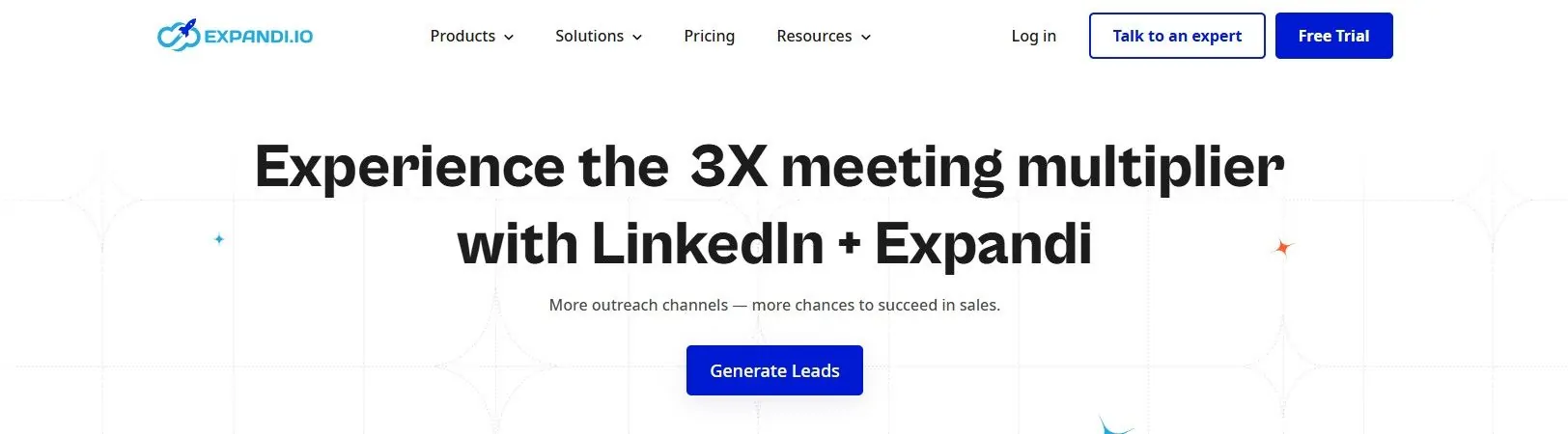
O Expandi is one of the best-known automation tools for LinkedIn, focused on account security and personalization of approach.
Highlights
- Automated sending of invitations and messages
- Dynamic customization with variables
- Conditional workflows
- Limit control to reduce the risk of blockages
Suitable for: Companies that prioritize direct prospecting via LinkedIn with a high level of personalization.
4. Dripify
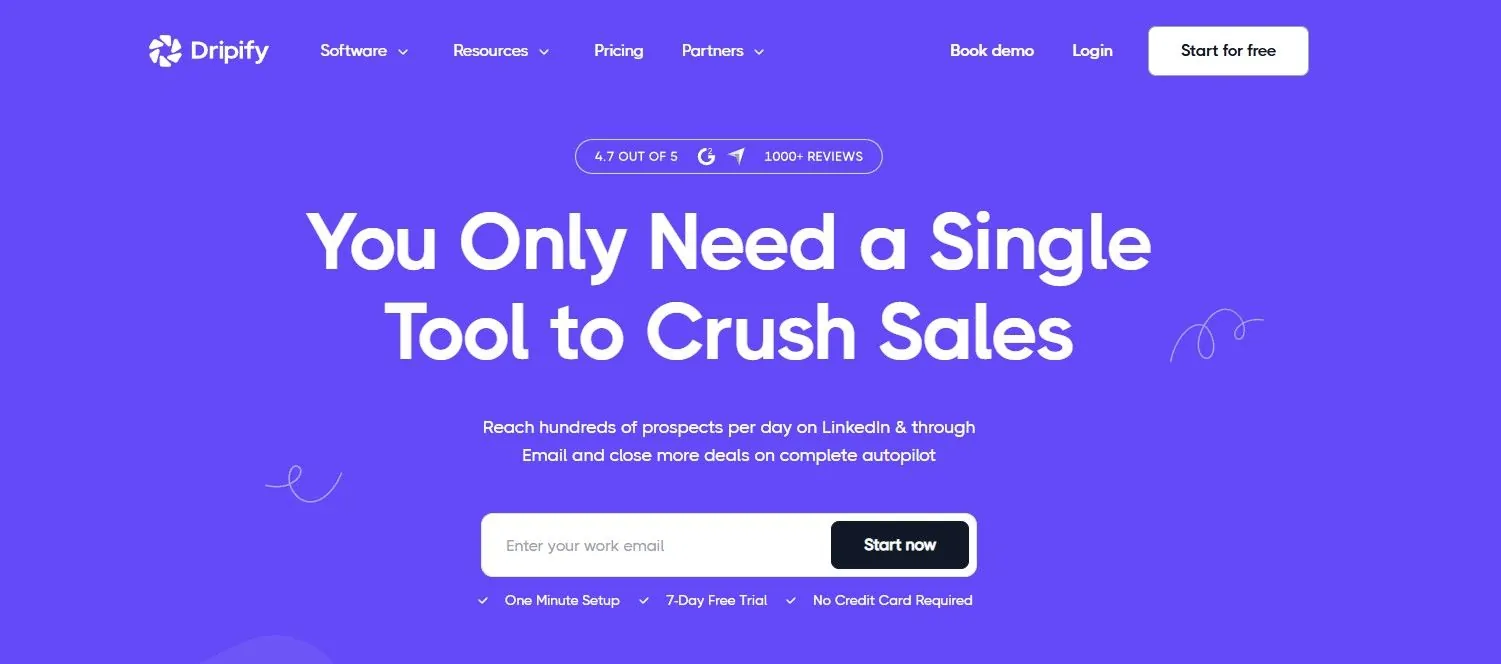
O Dripify offers a simple interface for creating automated outreach funnels on LinkedIn, It is widely used by lean commercial teams.
Features
- Connection sequences and messages
- Campaign performance dashboard
- Managing multiple accounts
- Conversion reports
Suitable for: Small teams that need to start automation quickly and with less technical complexity.
5. LinkedHelper
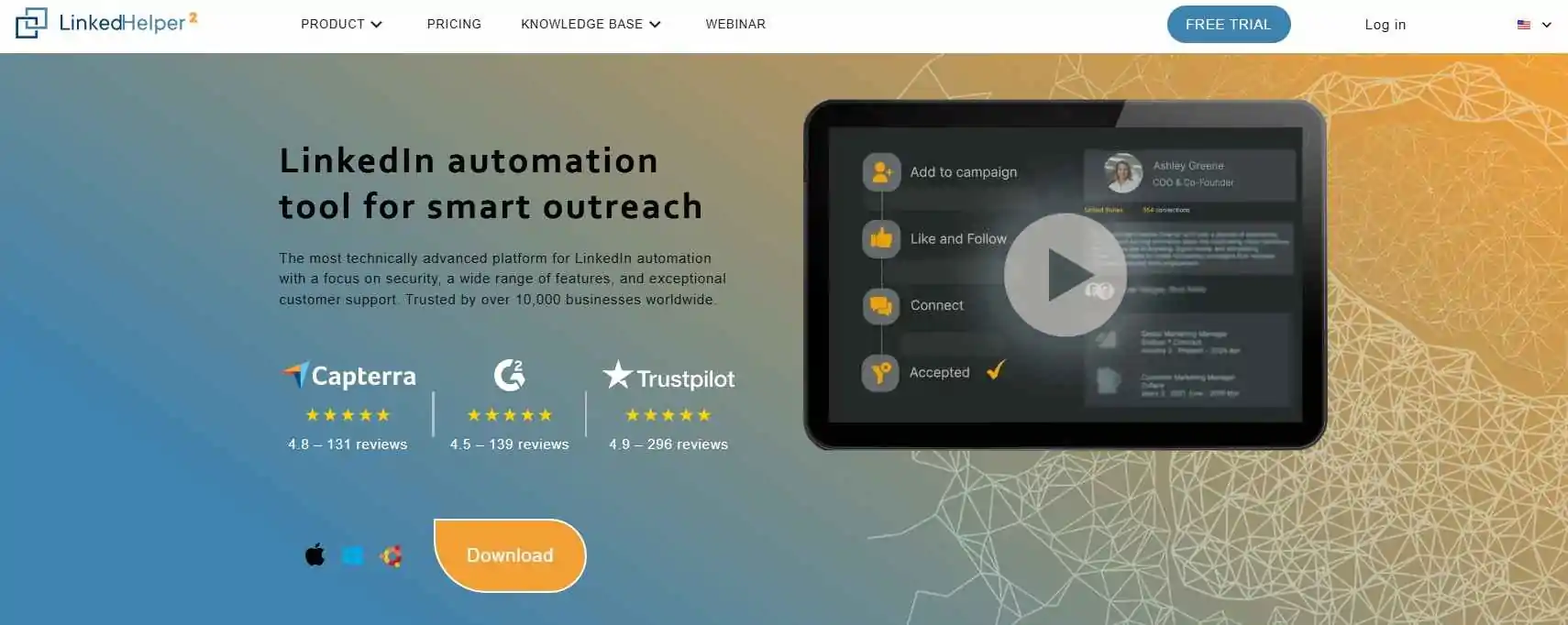
O LinkedHelper is a traditional automation tool, known for its large number of operational features.
What it offers
- Automation of visits, invitations and messages
- Extracting data from profiles
- CRM integrations
- Campaigns at scale
Attention
- Less intuitive interface
- Beware of LinkedIn limits
Suitable for: Advanced users who need a high volume of automation.
6. MeetAlfred
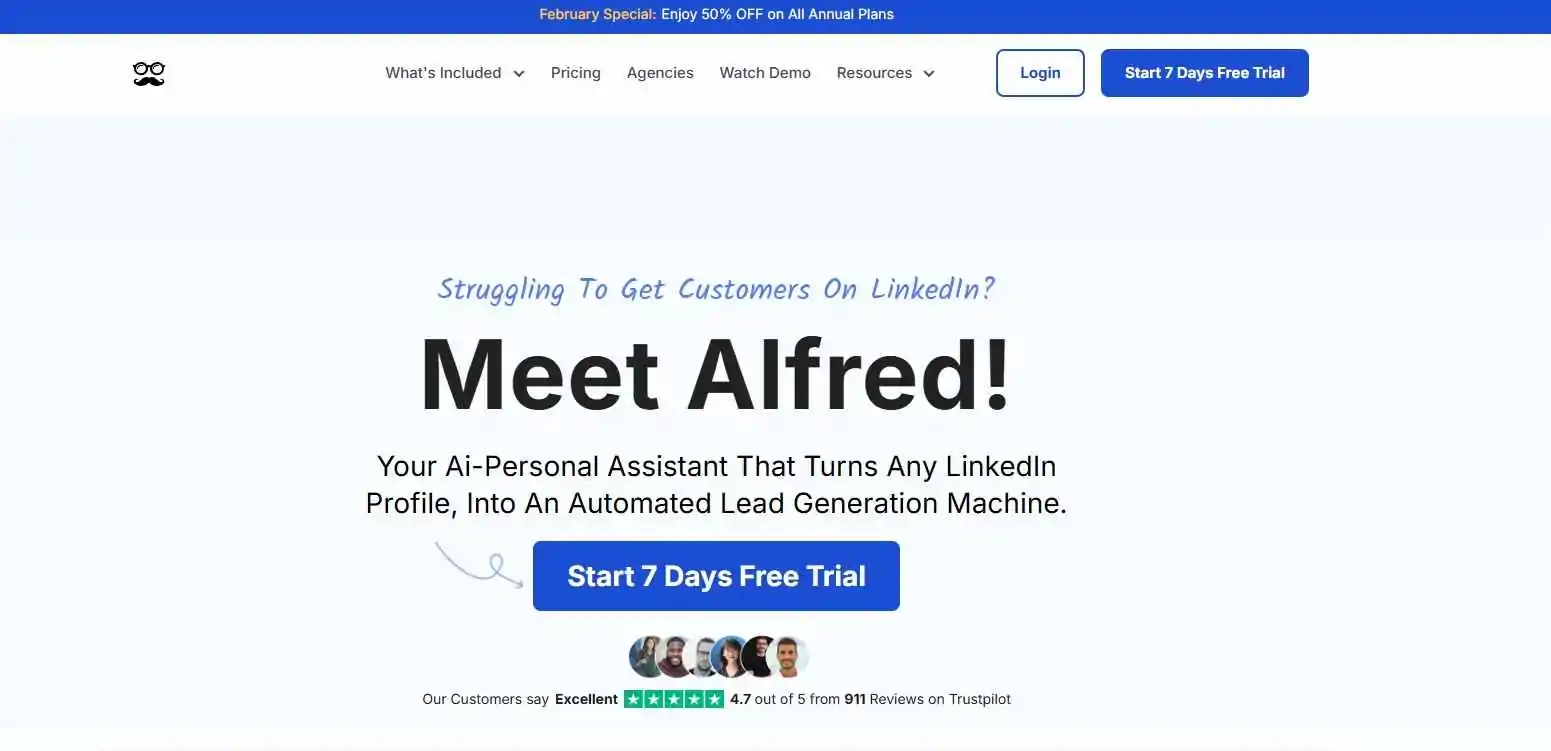
O MeetAlfred combines LinkedIn automation with e-mail and Twitter, creating a multi-channel approach on a single platform.
Differentials
- Integrated campaigns between channels
- Unified inbox
- Message templates
- Performance reports
Suitable for: Companies wishing to diversify channels beyond LinkedIn.
7. Lemlist
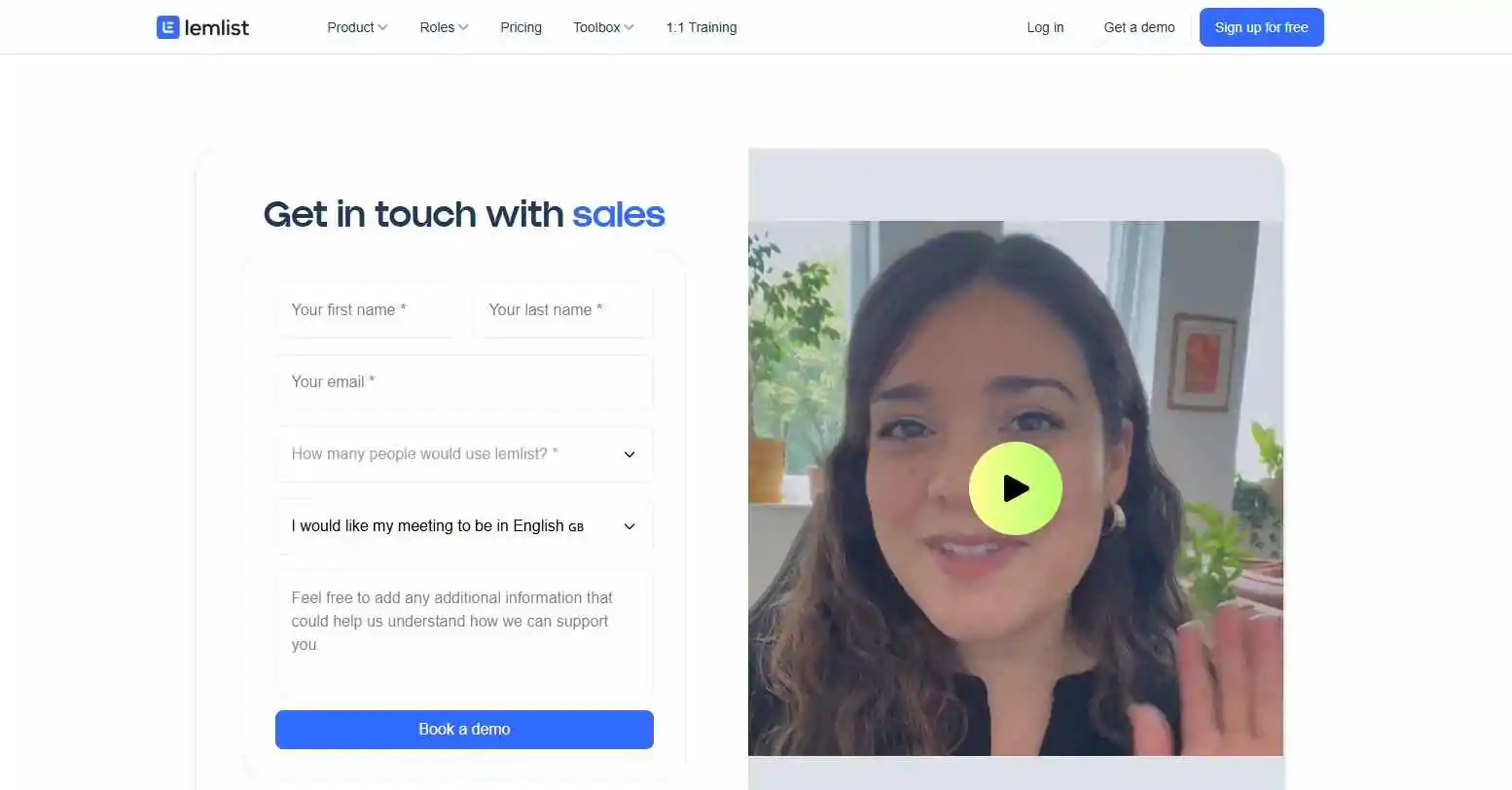
O Lemlist is strongly focused on personalized cold email, But it can be integrated into social prospecting.
Key features
- Advanced email personalization
- A/B testing of messages
- Domain heating
- Automation of follow-ups
Suitable for: Strategies centered on outbound e-mail with a high level of personalization.
8. Phantombuster
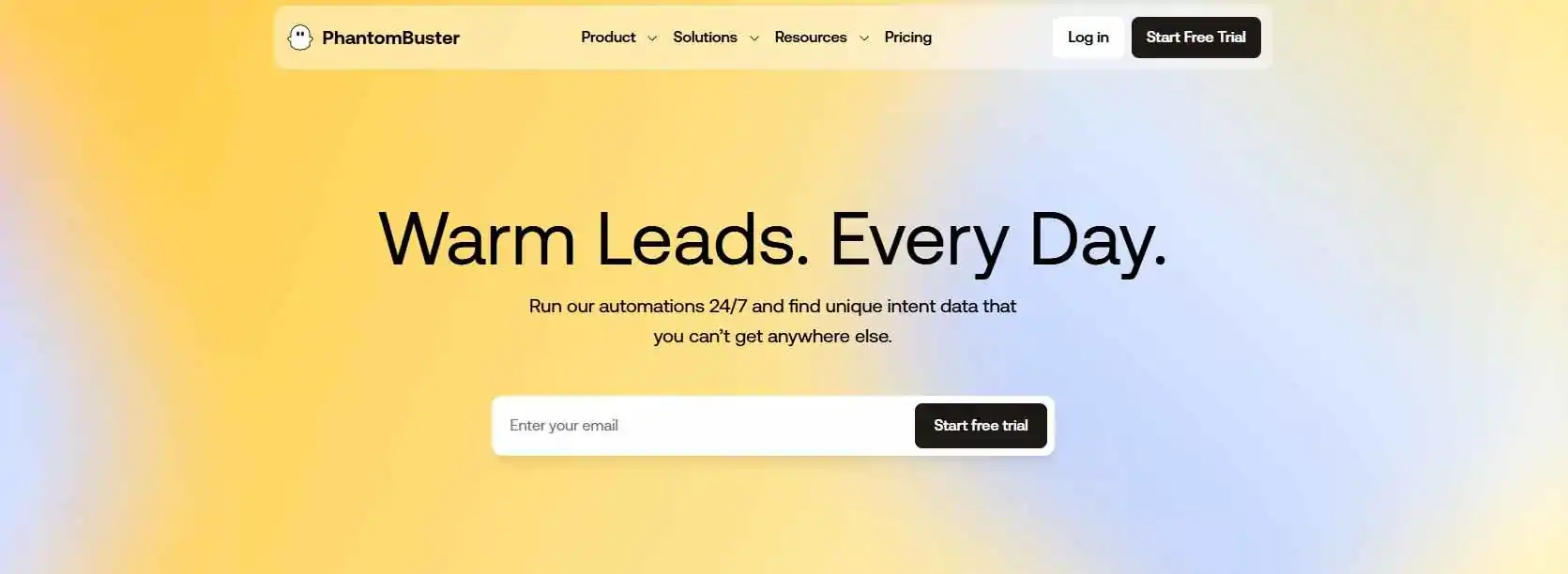
O Phantombuster works as a platform for task automation and data scraping, going beyond traditional prospecting.
Possibilities
- Extracting lists of leads
- Automation of social interactions
- Integration with multiple platforms
- Customized workflows
Suitable for: Technical teams who want tailor-made automation.
9. Waalaxy
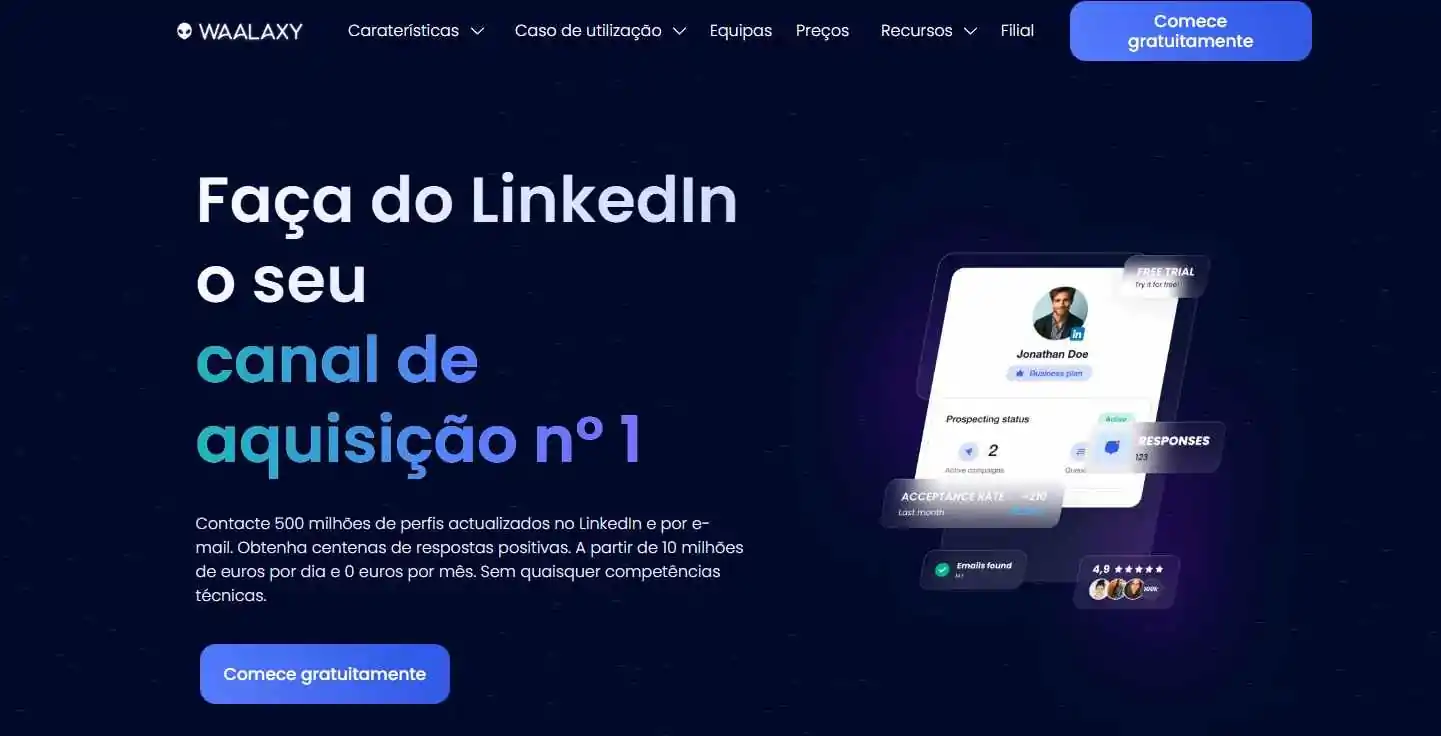
O Waalaxy focuses on simplicity and user experience, and is common among consultants and small business operations.
Features
- Intuitive interface
- Automatic LinkedIn and e-mail sequences
- Ready-made templates
- Quick setup
Suitable for: Professionals looking for simple automation without too much complexity.
10. Snov.io
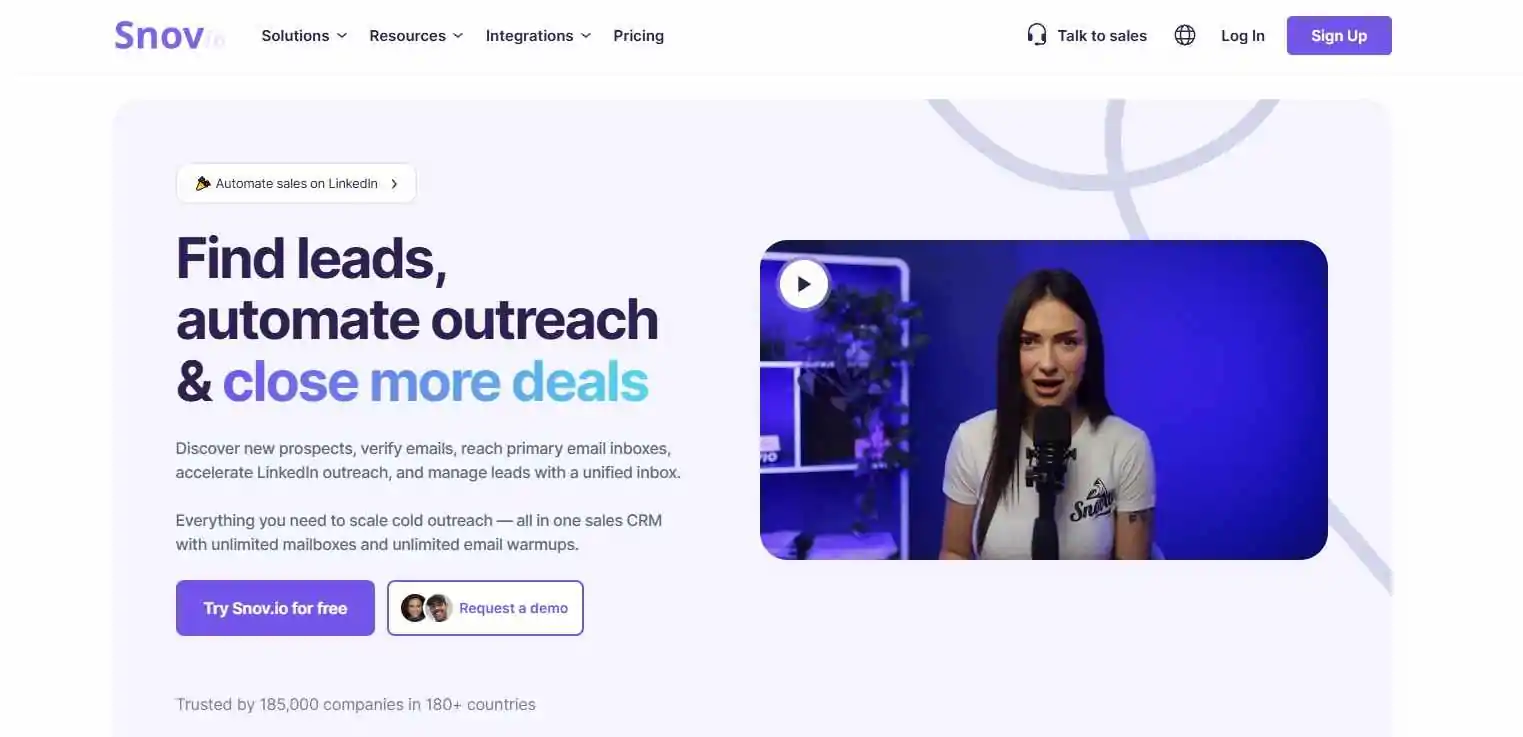
O Snov.io combines lead generation, email verification and campaign automation, It is a hybrid solution between marketing and sales.
Resources
- Email search and validation
- Automated sequences
- Open and click tracking
- CRM integration
Suitable for: Teams that work heavily with email prospecting.
How to choose the best prospecting platform in 2026
There is no single tool that is ideal for all companies. The choice depends mainly on three factors:
- Commercial maturity: Start-ups tend to need more methodology and strategy than just software.
- Clarity of ICP: Without defining the ideal customer, even the best tool only generates volume without quality.
- Internal operational capacity: Tools require management, testing and continuous optimization. Not every company has the structure for this.
For this reason, many organizations combine them:
- Strategic prospecting partners, such as Prime SDR
- Data and automation tools, such as Apollo
- Operational outreach software, such as Expandi or Dripify
This integration creates a more predictable model for generating meetings.
Automation is no substitute for strategy
A common mistake is to believe that automation alone solves the business problem. In practice, tools only execute already defined processes.
Consistent results come when there are:
- Clear ICP
- Well-placed messages
- Validated value proposition
- Integration between marketing, SDR and sales
- Tracking real metrics
Without these elements, any platform becomes just a message trigger.
The B2B prospecting scenario in 2026
The clearest market trend is combining technology and human intelligence.
On the one hand, tools are evolving:
- Multi-channel automation
- Data enrichment
- CRM integration
- Predictive analysis
On the other hand, the need is growing:
- Real customization
- Business context
- Relevant conversations
- True lead qualification
Companies that balance these two points build more predictable and sustainable pipelines.
Conclusion - LinkedIn automation platforms
Prospecting automation is no longer a differentiator but an essential part of B2B commercial operations. However, the real impact is not in the tool chosen, but in the strategy behind it.
While platforms such as Apollo, Expandi or Dripify help scale execution, strategic approaches such as that of Prime SDR act at the root of the problem: generating qualified meetings with consistency.
In 2026, the fastest-growing companies will not be those that send the most messages, but those that combine data, technology and business intelligence to turn prospecting into predictable revenue.
Now, if you're looking for website development professional, and optimized with the best SEO strategies, Then click on the button below and get a quote now!

Frequently Asked Questions
Is automation on LinkedIn allowed?
LinkedIn has specific rules on the use of external tools. Automation must respect sending limits, message personalization and human behavior to reduce the risk of being blocked.
What is the main advantage of using automation for prospecting?
The main advantage is gaining scale without losing organization. You can contact more qualified leads, track responses and optimize campaigns based on real data.
Is automation replacing human sales work?
No. Automation supports repetitive tasks, but in-depth qualification, negotiation and closing still depend on human interaction and understanding the customer's context.
How to choose the best automation tool for LinkedIn?
It is important to evaluate integration with CRM, level of personalization, account security, data quality and ease of use. The choice must be aligned with the sales team's stage of maturity.
Is it worth outsourcing prospecting instead of using in-house tools?
In many cases, yes. Specialized companies combine technology, methodology and operational experience, speeding up the generation of qualified meetings without the need to structure everything in-house.

Lucas Pelisari
Lucas Pelisari has been an SEO and content specialist at UpSites for over 6 years, working on the creation and optimization of digital strategies focused on lead generation and organic growth.With experience in website development projects, on-page SEO and link building, he works directly on structuring content and pages aimed at positioning on Google and acquiring qualified traffic.Throughout his career, he has worked on projects for companies such as Kommo, Aldanth, Physical Care, In4, Design.com, Adaptive, Clipto and YeSim, as well as several other clients served by UpSites.He works on projects in different niches, including technology, SaaS, services and local businesses, with a focus on performance, conversion and scalability.Her work is directly linked to lead growth and increased organic visibility, with projects that have seen consistent traffic gains after implementing SEO and content strategies.His content covers topics such as professional website creation, SEO, page structure, performance, user experience and digital growth strategies, always with a practical approach based on real market scenarios.Professional networks:LinkedIn: https://www.linkedin.com/in/lucas-widmar-pelisari-78920033/Instagram: https://instagram.com/lucaswidmar
See all posts


 Calculate Price Now